


 Breaking News
 Tracy
 Tracy
 Nov 04 2026
 32
Global cybersecurity company Kaspersky is calling on Asia-Pacific organizations to go beyond convenience in cybersecurity training, warning that the region's strong preference for digital learning must be matched by equal commitment to depth, credibility, and practical skills development if it is to meaningfully close its widening cybersecurity talent gap.
Kaspersky research shows that 66% of cybersecurity professionals in the region prefer online learning, the highest rate globally and above North America (55%), Europe (42%), and the global average. As a result, only 34% prefer offline formats, one of the lowest rates across all regions surveyed.
"Online learning has taken strong root across Asia-Pacific, and that is a genuine strength. It means the region can scale skills development quickly and cost-effectively. But speed without depth is a risk. The organizations that will close the cybersecurity skills gap are not the ones training the fastest. They are the ones training the right way, with the right content, from the right people," said Adrian Hia, Managing Director for Asia Pacific at Kaspersky.
Meanwhile, the preference for online delivery does not mean APAC organizations are willing to compromise on quality. When selecting a training provider, a panel of known experts ranks as the top credibility criterion for 55% of APAC organizations, one of the highest rates globally, above brand name (48%) and client testimonials (49%). The region wants the convenience of online delivery, but it demands recognized, trusted expertise behind it.
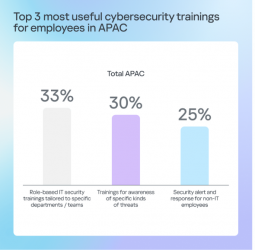
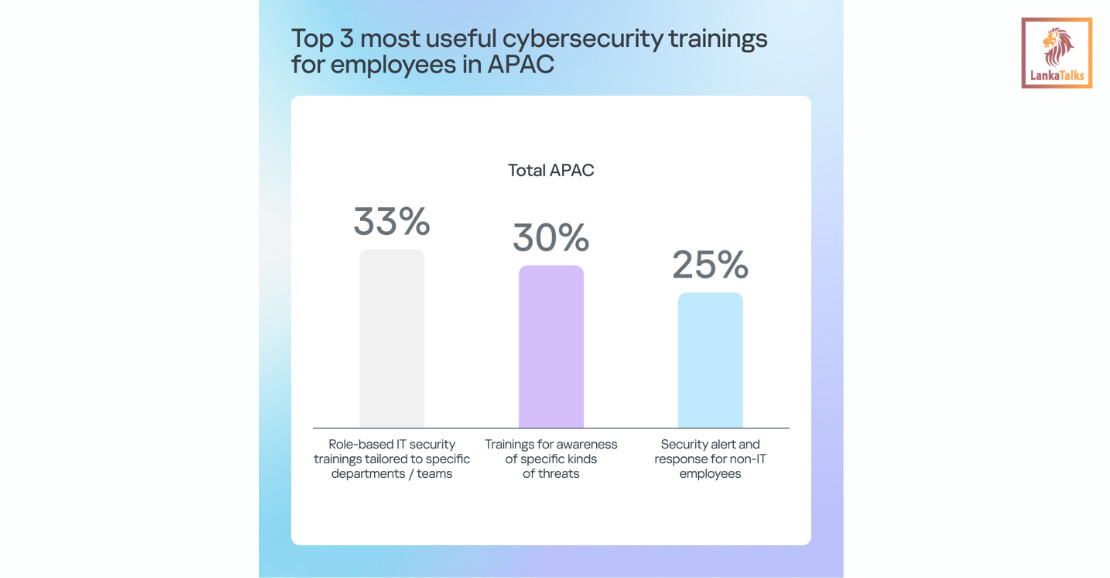
When it comes to what APAC organizations actually want from cybersecurity training, the data points to relevance and role-specificity over generic awareness. The survey conducted by Kaspersky's internal research center shows that role-based IT security trainings tailored to specific departments and teams is the top training priority for APAC organizations (33%), with Vietnam (42%), Indonesia (36%) and Malaysia (33%) leading demand across the region.
Trainings for awareness of specific kinds of threats follow closely at 30%, while security alert and response training for non-IT employees, covering what to do when a cyberattack is happening, is prioritized by 25% of APAC organizations, with Indonesia notably higher at 31%.
“APAC organizations do not want one-size-fits-all cybersecurity training. They want programs that speak directly to the roles, responsibilities, and real-world scenarios their teams actually face,” Hia further said.
For organizations and individuals navigating this complex landscape, Kaspersky Cyber Pathways offers a solution built around exactly what APAC demands, which is online accessibility backed by deep, role-specific expertise.
Rather than offering a generic curriculum, the platform maps six core cybersecurity specializations: Security Operations, Threat Intelligence, Security Assessment, Information Security Research, Network Security, and Malware Analysis. It helps professionals identify the specific combination of technical capability, AI literacy, and practical skills each role demands.
In a region where hiring managers rate hands-on training and practical experience as their top qualification criteria, Cyber Pathways bridges the gap between online convenience and the applied, credible expertise that APAC organizations are actively looking for.