


 Breaking News
 Sheron
 Sheron
 Mar 12 2026
 773
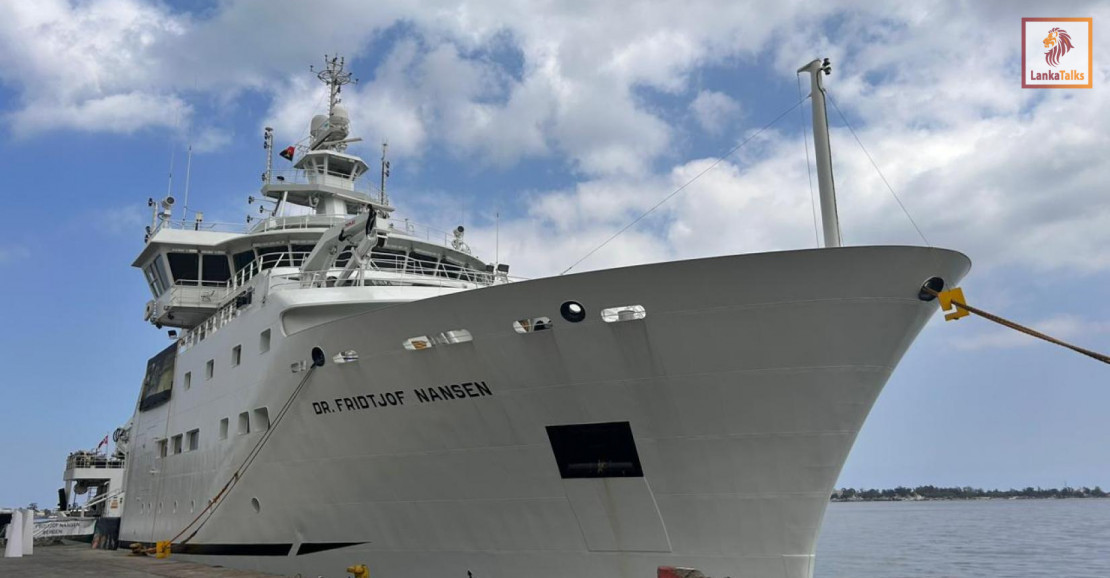
773The United Nations-flagged research vessel Dr. Fridtjof Nansen arrived in Sri Lanka for a joint marine survey, the island nation’s Foreign Ministry said, after the ship was delayed from carrying out the same task eight months ago.
Dr. Fridtjof Nansen research vessel supports countries in collecting critical scientific data for sustainable fisheries management and in understanding how climate change affects marine ecosystems.
“The survey spanning 32 days will focus on assessing marine living resources and marine ecosystems, providing updated scientific data that will support Sri Lanka’s sustainable fisheries management and ocean governance,” Sri Lanka’s Foreign Ministry said in a statement.
“During the mission, scientists will undertake a range of activities including hydro-acoustic surveys to estimate the biomass and distribution of key fish stocks in Sri Lankan waters; assessment of marine pollution levels; and biodiversity monitoring.”
The visit is expected to build capacity as the mission will bring together Sri Lankan scientists from NARA and other national institutions with international experts, promoting scientific collaboration and knowledge exchange.
Sri Lanka previously last hosted Dr. Fridtjof Nansen in 2018, when the vessel conducted a comprehensive survey of Sri Lanka’s continental shelf and upper slope in collaboration with national institutions.
Earlier Nansen surveys were also carried out in Sri Lankan waters in 1978–1980, reflecting a long-standing scientific partnership under the Nansen program.
Approval for the same ship to conduct research was delayed when it arrived in Sri Lankan waters last July.
The UN’s Food and Agriculture Organization (FAO) decided to cancel the marine research around Sri Lanka in July because it did not have timely approval due to Sri Lanka’s delay.
The cancellation of the visit was estimated to have caused direct losses of over $1 million to Sri Lanka. After the FAO’s cancellation Sri Lankan authorities requested to carry out the research.
Sri Lanka’s delay regarding the UN’s FAO research vessel was due to the government’s delay in formulating standard operating procedures (SOP) to handle foreign research vessels.
Repeated requests from the UN and FAO were rejected by Sri Lanka’s Foreign Ministry due to the lack of an SOP in place. The SOP was expected to be in place early this month.
source: Economy Next