


 Breaking News
 Puvanya
 Puvanya
 Oct 08 2026
 41
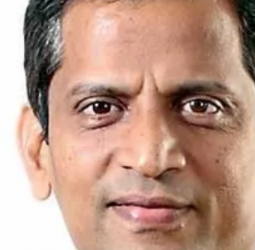
41Though Sri Lanka’s higher-than-expected primary surplus helped push down its debt-to-GDP ratio past the IMF’s forecasted targets, part of the surplus maintained comes from underspending monies budgeted and allocated towards capital spending, Committee on Public Finance Chairperson and Parliamentarian Dr Harsha de Silva said, speaking in Parliament on Tuesday (6).
Acknowledging Sri Lanka’s faster-than-expected decline in the debt-to-GDP ratio, which is projected to fall to 93% this year, he said: “The Public Debt-to-GDP ratio at the end of 2025 was 98%, and it is expected to go down to about 93%, which is a positive. One thing we need to acknowledge is that most of the reduction came during 2022 and 2024, where the ratio fell from 121% to 101%.”
Official data shows Sri Lanka recorded a primary surplus of 5.4% of GDP in 2025, far exceeding the IMF’s target of 2.3%.
“The result of hard decisions on revenue, spending and restructuring was taken before this government came to office. The higher-than-expected primary surplus has helped to push the ratio down faster than what the IMF forecasted. Part of that surplus comes from spending less than what was budgeted, including capital spending.”
“So far from January to August this year, only 26% of the capital expenditure has been spent,” de Silva said.
“Under-spending is not the same thing as fiscal reform, and it costs us growth.” Referring to Deputy Minister of Finance and Planning Anil Jayantha Fernando, who had detailed what Sri Lanka may expect in the November Budget presentation, he said:
“He said that they are going to spend more than 4% on capital expenditure, let's see. That is what you need to do, but then you have to actually spend it, there is no point in saying you are going to spend it if you don’t spend it.”
He further noted that the Sri Lankan Government’s higher-than-expected revenue seen in 2025 was due to pent-up vehicle demand. “63% or Rs 900 billion of the Rs 1.4 trillion revenue increase in 2025 was due to it.”
The International Monetary Fund (IMF) in its statement on the Seventh EFF review noted that Sri Lanka’s efforts in strengthening public investment should extend to address its own challenges related to capital expenditure execution.
“Efforts to strengthen public investment management should continue to address bottlenecks to capital spending execution, including to accelerate cyclone Ditwah-related recovery and reconstruction,” the multilateral said.