


 Breaking News
 Tracy
Tracy Tracy
Tracy Jan 07 2026
 912
912Sri Lanka’s post-Cyclone Ditwah food security strategy is entering a critical phase as the Government accelerates national storage plans, restores damaged cultivation, and rolls out farmer assistance, while agricultural experts caution that gaps in re-cultivation, seed availability, and climate resilience could still pose serious risks in the months ahead.
Deputy Minister of Food Security R.M. Jayawardana said the Government’s immediate priority following the cyclone was to stabilise food availability through strengthened storage systems and rapid restoration of agricultural activity, stressing that buffer stocks and infrastructure readiness were now central to national planning.
Under the national food security and nutritional protection programme launched in December 2024, the Government aims to maintain national buffer stocks of essential food items sufficient for at least three months. Three strategic storage hubs have been identified for this purpose in Matara, Colombo, and Kurunegala.
Jayawardana said repair work on an existing storage facility in Matara was underway, while a new facility would be constructed in Kurunegala. In Colombo, development has commenced on an 8-acre plot in Peliyagoda, with completion targeted within the year. He said the programme was designed not only to address immediate post-disaster needs but also to cushion the country against future climate-related shocks that disrupt supply chains.
He also addressed the long-delayed Dambulla cold storage facility built with an Indian grant, acknowledging persistent construction deficiencies identified by the Central Engineering Consultancy Bureau (CECB).
Although the facility was ceremonially opened during the Indian Prime Minister’s visit at the request of the Indian High Commission, Jayawardana confirmed it remained non-operational. An additional Rs. 250 million has been allocated from the 2026 Budget to complete essential works, including lighting and storage improvements, with the aim of making the facility functional this year.
Scale of losses and agriculture’s central role
Cyclone Ditwah caused widespread devastation across all 25 districts, with the World Bank’s rapid initial assessment estimating total losses at $ 4.1 billion. Of this, approximately $ 814 million, or about 20%, was incurred by the agriculture sector.
University of Peradeniya Department of Crop Science Senior Prof. Buddhi Marambe said these figures underscored the gravity of the challenge facing policymakers. He said the World Bank assessment, while rapid, provided a valuable overview of the scale of damage and highlighted agriculture as the most critical sector requiring urgent intervention.
Complementing the World Bank’s findings, the Food and Agriculture Organization (FAO), in collaboration with Sri Lanka’s Department of Agriculture (DOA), conducted an islandwide survey that revealed the depth of the impact on paddy cultivation, the backbone of national food security.
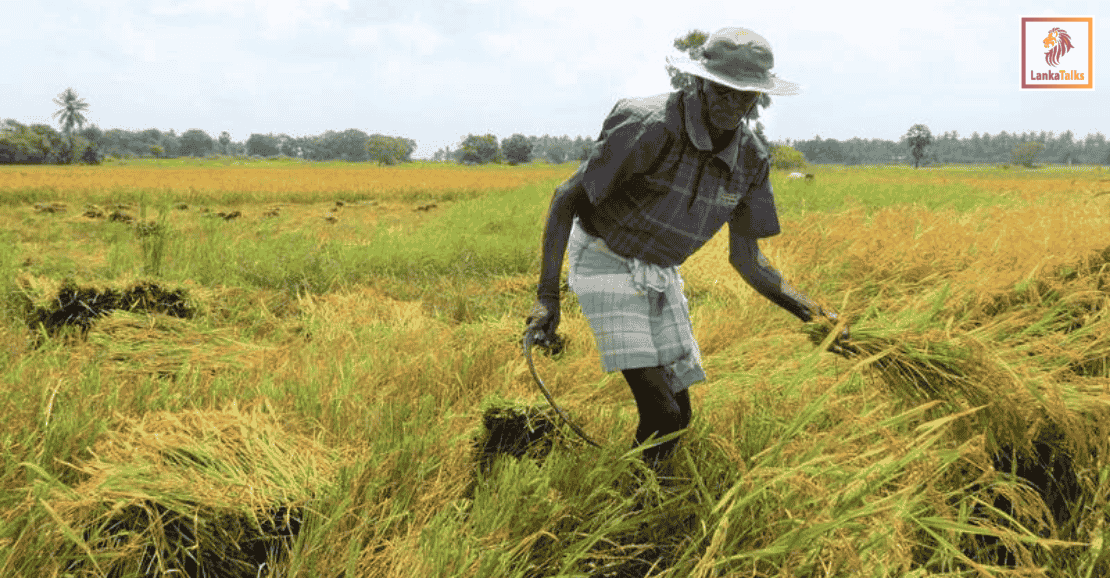
According to Prof. Marambe, the FAO-DOA survey found that around 130,000 hectares of paddy land have been affected by flooding. Of this, 106,000 hectares were classified as badly damaged. Critically, about 10% of this badly damaged land, roughly 10,600 hectares, cannot be brought back into cultivation in the short term.
“In areas such as parts of the Mahaweli system, severe topsoil erosion has exposed the hardpan. These lands require proper management over the next four to five months before they can be cultivated again. It would be unwise to invest heavily in trying to cultivate them immediately,” Prof. Marambe said.
This leaves around 96,000 hectares that are potentially cultivable in the current season, but significant constraints remain, particularly with regard to seed availability and timing.
Seed shortages and timing pressures
Prof. Marambe warned that seed paddy availability had emerged as one of the most pressing challenges in the recovery phase. He said many farmers had already used their seed stocks for the initial planting before the cyclone struck.
“As of 11 December 2025, the DOA stated that, together with the private sector, they had enough seed paddy to recultivate only about 38,000 hectares. For the remaining 58,000 hectares, farmers would have to rely on whatever seed they have stored for consumption, which poses a clear risk to yield and quality,” he said.
At present, there is no comprehensive data on how much of the damaged land has actually been recultivated. Prof. Marambe said that by mid-January, more reliable statistics should be available, allowing authorities to assess the cyclone’s real impact on Maha season paddy production.
For context, he noted that at the time Cyclone Ditwah made landfall, about 620,000 hectares of paddy had already been cultivated, against a seasonal target of 869,000 hectares for the Maha season. This means that even before accounting for damaged land, approximately 249,000 hectares remained uncultivated.
The challenge now, he said, was twofold: farmers must not only recultivate damaged lands where possible but also bring the remaining uncultivated areas under cultivation, all while racing against the seasonal calendar.
Govt. response and phased recovery
Deputy Minister Jayawardana said the Government’s immediate response focused on temporary measures to enable farmers to resume cultivation as quickly as possible. Priority has been given to repairing waterways and essential agricultural infrastructure, particularly in the worst-hit Badulla District in the Uva Province.
He said Badulla alone had suffered losses of around Rs. 800 million, but through targeted interventions, about 90% of damaged cultivations in the district had already been revived. He acknowledged, however, that recovery could not be instantaneous.
“We are adopting a strategic, phased approach rather than attempting to implement all remedial measures at once. At the same time, we are incorporating lessons from this disaster to mitigate future risks,” Jayawardana said, adding that guidance from the World Bank was helping shift the response from short-term fixes to more durable solutions.
He said foreign aid and welfare support had been prioritised for education, roads, bridges, and agriculture, reflecting the sectors most affected by the cyclone.
Recommencing paddy cultivation
Jayawardana said many farmers had already recommenced paddy cultivation, with seeding underway and some fields already showing early growth. In areas where damage is more severe and repairs are likely to take longer, the Government is assisting farmers to return to normalcy through a combination of infrastructure repair and direct support.
However, Prof. Marambe cautioned that the speed and manner in which farmers resume cultivation could have major implications for yields and food security. “One critical factor is whether farmers wait for the full disbursement of the Government’s relief package or begin cultivation immediately. We need another week or two to get real feedback on farmer behaviour,” he said.
He warned that timing mistakes could lead to further losses. Farmers traditionally plant long-duration paddy varieties of around three-and-a-half months during the Maha season. If recultivation begins late, particularly after mid-December, farmers must switch to short-duration varieties of two-and-a-half to three months, which are usually grown during the Yala season.
“If farmers mistakenly plant long-duration varieties after, say, 20 December, the harvest could coincide with heavy rains, leading to another disaster. It is absolutely vital that farmers follow the DOA’s advice,” Prof. Marambe said.
He cited examples of commonly grown long-duration varieties, including BG 352, BG 357, and BG 358. He explained that varieties with numerical codes between 350 and 399 were generally three to three-and-a-half-month varieties, with popular types such as keeri samba, or BG 360, falling into this category. Samba varieties, typically short-grain, tend to have longer maturity periods, while nadu varieties are long-grain types.
Food security outlook hinges on farmer response
Prof. Marambe said the overall food security picture depended heavily on whether farmers succeeded in cultivating both the remaining uncultivated 249,000 hectares and most of the 96,000 hectares of damaged but potentially recoverable land.
“If both these areas are brought under cultivation, Sri Lanka should be relatively okay in meeting its rice requirements. But if they are not, the impact on food security will be severe and cannot be compensated by the Yala season alone,” he said.
He stressed that Sri Lanka’s annual paddy production was the combined output of the Maha season and the Yala season. A significant shortfall in Maha would therefore place immense pressure on the entire year’s food supply.
A more definitive assessment, he said, would only be possible by mid-January, once recultivation data becomes available.
Vegetables: Short-term shocks, faster recovery
Beyond paddy, vegetable cultivation has also suffered extensive damage. Prof. Marambe said around 44% of upcountry vegetable lands and 41% of low-country vegetable lands had been devastated by the cyclone.
However, he noted that vegetables were not bound to a single season and could recover relatively quickly, often providing yields within three months. While price increases are likely in the short term, particularly between February and April due to current supply disruptions, the sector has the capacity to catch up faster than paddy.
Deputy Minister Jayawardana said this assessment aligned with Government observations that vegetable prices, which initially spiked due to transport and supply disruptions, had already begun to stabilise. He said any remaining increases were likely to be seasonal, linked to the festive period, rather than indicative of a deeper food security crisis.
Livestock and fisheries under pressure
The animal production sector presents a more complex challenge. Prof. Marambe said the Department of Animal Production and Health reported the loss of around 500,000 layer hens and 250,000 broiler chickens due to the cyclone.
“This will create temporary issues with chicken meat and egg prices. Although we had an egg surplus before the cyclone, the layer industry may take about six months to recover fully, while the broiler industry could recover in around three months,” he said.
He warned that panic buying could artificially worsen shortages, disrupt national distribution networks, and create a short-term perception of food insecurity that exceeds the actual supply problem.
Jayawardana said the Government’s assessment was that livestock losses, while significant for affected livelihoods, were not severe enough to cause a national shortage. He said prices were expected to improve as production recovered.
Compensation, inputs and limits of assistance
Jayawardana confirmed that the Government would provide seeds, fertiliser, and direct financial assistance to affected farmers. Under the relief package, Rs. 150,000 is being provided to affected persons, while cultivators in the upcountry will receive Rs. 200,000, reflecting the greater complexity and risk in those areas.
He said farmers who had already received the cash subsidy would also be provided with seeds and fertiliser to ensure that assistance translates into actual cultivation. The compensation process for affected families and property damage is in its final stages, with beneficiary identification for agricultural payments nearly complete.
However, he ruled out compensation for major equipment losses such as tractors, citing resource constraints. “Our focus is on enabling a return to cultivation. The grants are intended to revive damaged agricultural land, not to replace every asset,” Jayawardana said.
Upcountry risks and landslides
The upcountry presents some of the most difficult challenges in the post-cyclone recovery. Jayawardana said the Government had sought reports from the National Building Research Organisation to guide the safe resumption of agriculture in landslide-prone areas.
He acknowledged that in some zones, evacuations and the removal of housing would be unavoidable, with any agricultural planning needing to account for the demographic impact of such relocations.
Prof. Marambe placed these challenges in a broader environmental context, noting that the central highlands, which make up about 13.6% of Sri Lanka’s landmass, receive 77% of the country’s rainfall and feed 23 of its 103 river basins.
“The more than 1,200 landslides reported due to Cyclone Ditwah were unprecedented. Protecting these sloped lands through proper soil conservation is costly but absolutely essential,” he said.
Building long-term resilience
Both Deputy Minister Jayawardana and Prof. Marambe emphasised that long-term resilience had to now become a central pillar of food security policy.
Prof. Marambe said Sri Lanka already had climate-resilient paddy varieties developed by the DOA, including drought-tolerant varieties such as BG 251, BG 314, and BG 377, and a flood-tolerant variety, BG 455, which can withstand waterlogging for 10–12 days.
However, he noted that BG 455 was a four-and-a-half-month variety, underscoring the need to develop shorter-duration, flood-tolerant varieties. He said such breeding programmes took around six years but were essential investments.
He also pointed to gaps in soil conservation, noting that while Sri Lanka had a Soil Conservation Act, implementation had been weak due to limited funding, insufficient community engagement, and complex land ownership patterns. With the State owning about 83% of land, particularly in high-risk areas, cultivators often lack the incentive to invest in long-term conservation on land they do not own.
Jayawardana said the Government was examining World Bank recommendations on climate-resilient agriculture, drip irrigation, and improved waterway management, but stressed that feasibility varied by region and must be assessed against ground realities.
Prof. Marambe noted that financing from international development partners would be essential, particularly for expensive measures such as terracing and contour bunding in remote, high-risk areas. He said such interventions must be implemented with existing communities, not through displacement, to protect both livelihoods and land.
He welcomed the Ministry of Finance’s new National Climate Financing Strategy as a first step, but said the challenge now was to secure funding and translate scientific knowledge into on-the-ground action.
Finally, he warned that the $ 4.1 billion loss estimate did not yet account for damage to biodiversity and natural capital, which underpin long-term food security. He pointed to an Asian Development Bank project scheduled for 2028 focusing on upper watershed management as a positive, though long-term, development.
Source: The morning