


 Breaking News
 LankaTalks
 LankaTalks
 Mar 08 2026
 775
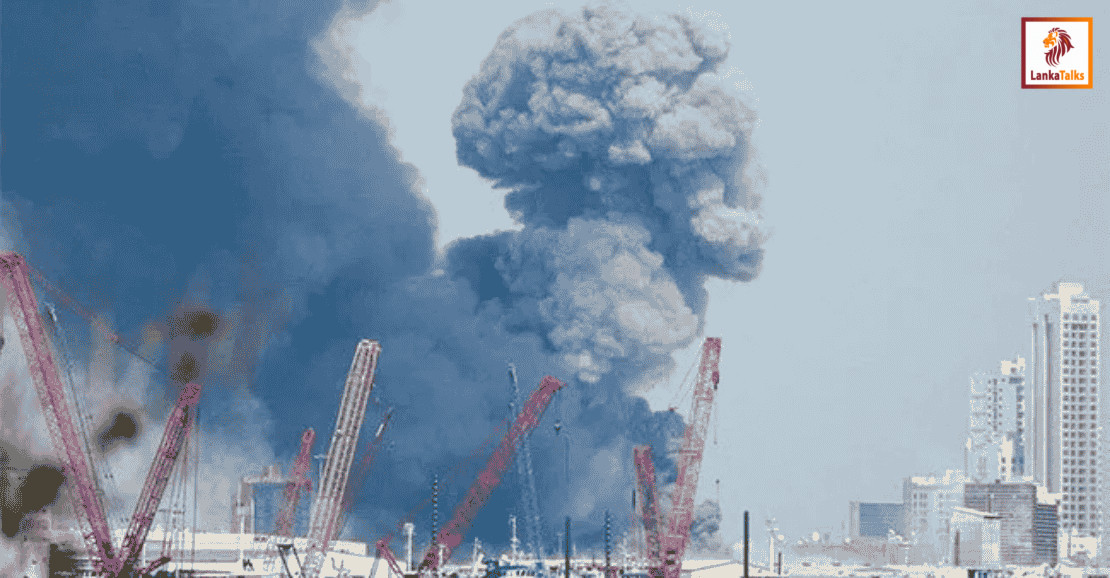
775The war in the Middle East has come uncomfortably close to Sri Lanka. Quite apart from the macroeconomic consequences that may unfold depending on the length of the conflict, the recent torpedo attack on an Iranian ship within Sri Lanka’s Exclusive Economic Zone (EEZ) should have sent a shockwave through our policy establishment. It should have felt almost as serious as a direct strike within our territorial waters.
The reason is not that Sri Lanka must choose sides in this war. Nor is it only about the possible economic ripple effects through oil prices, shipping costs, tourism sentiment, or remittances.
The real alarm bell is something deeper: Sri Lanka still does not have a clear Standard Operating Procedure (SOP) governing research vessels and other sensitive maritime activity within our EEZ.
This is not simply a diplomatic oversight. It is a strategic blind spot. Sri Lanka’s EEZ is roughly 7.8 times larger than our land mass. In maritime terms, Sri Lanka is far bigger than we often think. Yet our national conversation still treats the ocean as empty space rather than a strategic economic frontier.
Within that maritime zone lies enormous potential. Fisheries, marine biodiversity, ocean science, seabed resources, and new opportunities linked to the emerging blue economy. But resources alone do not create prosperity. Economics teaches us that prosperity comes from clear rules, defined rights, and institutions capable of managing resources productively.
Navigating geopolitical complexities
Property rights matter on land. They matter just as much at sea. The problem is that governing an ocean space of this scale is not easy for a small state. Sri Lanka’s enforcement capacity is limited. Monitoring marine scientific research, regulating foreign vessels, and ensuring compliance with national conditions requires technical expertise, institutional coordination, and consistent policy.
The difficulty, however, does not end there. Sri Lanka also operates in a complex geopolitical neighbourhood. This means we cannot simply permit any research vessel access to our waters without considering wider security implications.
If a scientific mission is perceived as compromising India’s security interests or regional stability, the consequences for Sri Lanka could be serious. At the same time, refusing access arbitrarily can damage relations with other major powers.
We have already seen this dilemma play out. On several occasions Sri Lanka found itself caught in a diplomatic crossfire when Chinese research vessels requested permission to operate near our maritime zone, triggering strong concerns from India.
When a country lacks a clear framework, every decision becomes a political crisis. If Sri Lanka allows the vessel, India is displeased. If Sri Lanka refuses, China is unhappy.
Both countries are critical economic partners. Both are far larger powers than Sri Lanka. But Sri Lanka’s objective should not be to please everyone in the moment. The objective should be to protect sovereignty while maximising the economic value of our maritime space. The only sustainable way to do this is through clear rules.
A shift from reaction to preparation
Sri Lanka needs a well-defined Standard Operating Procedure governing research vessels and other sensitive maritime platforms entering our waters. Such a framework should specify what types of activities are permitted, under what conditions, and with what safeguards.
Any marine scientific research conducted in Sri Lankan waters should be subject to strict conditions. Research data must be shared with Sri Lankan authorities. Sri Lankan scientists must participate in the research. Equipment and research objectives must be disclosed in advance. And the Government must retain the right to halt activities that violate agreed conditions.
If these requirements are unacceptable to a foreign vessel, permission should simply not be granted. This is not about confrontation. It is about governance.
Fortunately, the global legal framework for such governance already exists. The United Nations Convention on the Law of the Sea (UNCLOS) provides the legal architecture for managing maritime zones and regulating marine scientific research. Sri Lanka, India, and China have all ratified this convention.
The task before Sri Lanka is therefore not to invent new law but to translate existing international principles into clear operational rules tailored to the country’s national interests.
Sri Lanka also has a proud legacy in shaping global maritime law. The late Shirley Amerasinghe, one of Sri Lanka’s most distinguished diplomats, chaired the Law of the Sea Conference until his death in 1980. It is no coincidence that soon afterwards Sri Lanka established the National Aquatic Resources Research and Development Agency (NARA), under the leadership of Dr. Hiran Jayewardene, with the intention of building national expertise in marine science and maritime governance.
That vision remains relevant today. Unfortunately, Sri Lanka’s institutional capacity has not kept pace with the strategic importance of our maritime domain. We are still reacting to events instead of preparing for them.
If domestic capacity is insufficient, Sri Lanka should draw on partnerships with countries that possess strong maritime research systems. Nations such as Norway and others with advanced ocean governance frameworks could support Sri Lanka in building technical capacity, developing institutional structures, and training local experts.
An untapped economic opportunity
Strengthening maritime governance is not merely a defensive exercise. Done properly, it can generate economic benefits.
Sri Lanka can capture knowledge rents through shared research data about the Indian Ocean. We can build expertise by training Sri Lankan marine scientists and expanding opportunities for research institutions and private sector collaboration. Ports can generate additional commercial revenue through logistics, services, and maritime support activities. And the country can position itself as a credible neutral hub for humanitarian maritime services in the Indian Ocean.
In short, maritime governance is not just about security. It is also about economic opportunity. This is why it would be a mistake to view the Middle Eastern conflict only through the narrow lens of tourism losses or remittance risks.
Sri Lanka’s strategic thinking must go deeper. The real question is whether we are capable of turning our geography into an advantage rather than a vulnerability.
Because the uncomfortable truth is this: Sri Lanka’s greatest vulnerability is not that we refuse to choose sides. It is that we continue to operate without a rulebook. And in an increasingly contested Indian Ocean, that is no longer a luxury we can afford.
Source: The morning