


 Breaking News
 Sheron
 Sheron
 Mar 04 2026
 773
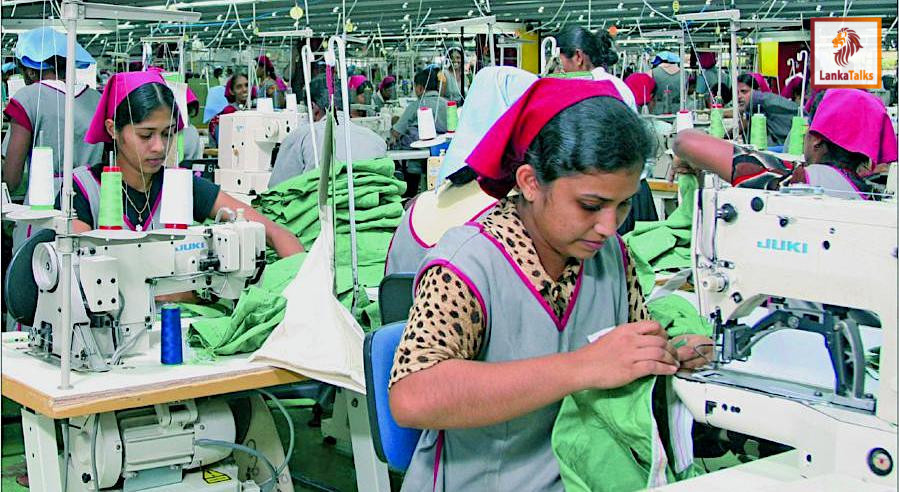
773Sri Lanka’s apparel sector is urgently calling for a level playing field in the global market, prompting the government to accelerate its pursuit of new free trade agreements (FTAs) and preferential trade agreements (PTAs).
Speaking at the official press conference announcing the 15th Sri Lankan Edition of the Textile Series of Exhibitions in Colombo recently, industry leaders and government officials outlined the critical hurdles and strategies required to achieve the country’s ambitious export target of US$ 30 billion by 2030. The event, which previewed the upcoming exhibitions scheduled for early March, served as a platform to address the widening competitiveness gap between Sri Lanka and its regional peers.
Joint Apparel Association Forum (JAAF) Chairman Felix Fernando highlighted that while Sri Lanka historically thrived by targeting high-income western nations, the global trade landscape has drastically shifted over the past three decades. He noted that Sri Lanka has missed significant opportunities in diverse markets such as Japan, India, China, Australia, and Canada, largely due to a lack of preferential access.
Fernando pointed out that competitors like Bangladesh enjoy zero-duty access to Japan due to their Least Developed Country (LDC) status, while Vietnam benefits from numerous strategic trade pacts. He explained that even if Sri Lankan manufacturers perfectly match the production costs of nations like Bangladesh, the additional import taxes levied on Sri Lankan goods render them completely uncompetitive. Fernando pleaded with the government to prioritise securing FTAs with key Asian and Australasian nations to ensure survival and growth.
Acknowledging these deep industry concerns, Sri Lanka Export Development Board (EDB) Chairman and CEO Mangala Wijesinghe outlined the government’s aggressive strategy geared towards market and product diversification.
With traditional markets like the European Union and the United Kingdom currently absorbing nearly half of the country’s exports, Wijesinghe stressed that the National Export Development Plan is actively targeting expansion into African, Middle Eastern, and ASEAN territories.
He assured the industry that a newly reactivated National Export Development Council of Ministers is analyzing potential partner countries for separate FTAs. Building upon existing agreements with India and Pakistan, and pending pacts with Singapore and Thailand, the government is aligning its international trade fair presence with these strategic new destinations.
Wijesinghe noted that the country’s export performance had already shown resilience, growing from US$ 15 billion to US$ 17.3 billion in 2025, driven largely by new product categories. He expressed optimism that upcoming frameworks like the UK Developing Countries Trading Scheme (DCTS) will further support this momentum.
However, Fernando cautioned that establishing market access is only one piece of the puzzle required to meet the government’s 2030 export aspirations. Citing a World Bank study, he revealed that Sri Lanka already possesses the capacity and infrastructure to scale its exports up to US$ 22 billion. The true challenge lies in bridging the gap from US$ 22 billion to the envisioned US$ 30 billion, an expansion that fundamentally relies on securing fresh capacity.
Fernando argued that this leap is impossible without substantial new investments, noting that current annual Foreign Direct Investment (FDI) inflows hovering between US$ 600 million and US$ 1 billion are grossly inadequate. To transform Sri Lanka into a truly attractive investment destination, the JAAF Chairman called for a comprehensive review of outdated customs laws, Board of Investment regulations, and tax structures. He urged the administration to exhibit the courage needed to dismantle lingering bureaucratic bottlenecks that continue to frustrate investors and stifle the sector’s full potential.
source: Daily Mirror