


 Breaking News

 Krishani
 Krishani
 Nov 11 2026
 8
Sri Lanka should factor the economic contribution of its forests, watersheds and coastal ecosystems into decisions on where to spend scarce public funds, Asian Development Bank (ADB) Country Director Shannon Cowlin said.
She noted the services these assets provide to agriculture, fisheries, hydropower and tourism were only partly reflected in the information used to guide economic planning and investment.
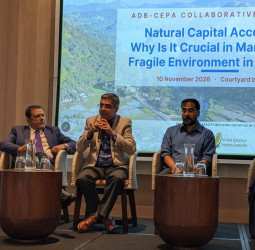
“For policymakers, natural capital accounting has value in its practical application. It helps strengthen evidence-based budget allocation, improve public investment planning, assess trade-offs among competing development priorities, and support the identification and design of investments that generate lasting economic, social, and environmental benefits,” she said while speaking at the ADB–CEPA Natural Capital Accounting Workshop.
Better data could also help ADB and the Government, she said, identify which natural assets are most important to the economy, where degradation poses the greatest risk and which investments would deliver the highest returns.
ADB is supporting analytical work under the proposed Sri Lanka Upper Watershed Ecological Restoration Program. The work examines how watershed ecosystems contribute to water security, hydropower generation and farm productivity, as well as their role in conserving biodiversity, strengthening climate resilience and reducing disaster risk. The aim is to inform future policy and investment decisions.
“One of the challenges in mobilizing investment for ecosystem restoration and nature-positive development is demonstrating economic value,” Cowlin said.
She pointed out quantifying the benefits of restoration could help Sri Lanka develop projects that can attract climate finance and private investment alongside public funding. It could also support blended financing for projects that draw on several sources of capital.
Natural capital accounting brings environmental and economic data together under a United Nations framework. It tracks the condition of natural assets and the services they provide, giving policymakers a basis for assessing how changes in those assets could affect the economy and livelihoods.
Cowlin linked the work to Sri Lanka’s efforts to build sources of growth beyond the recovery. She said putting the framework into practice would require institutions to work together, build technical capacity and commit to using the data in budget and investment decisions