


 Breaking News
 A.R.B.J Rajapaksha
 A.R.B.J Rajapaksha
 Mar 03 2026
 747
747Sri Lanka’s rubber industry entered 2025 under mounting pressure from weakening global demand and policy uncertainty to persistent disease outbreaks, labour shortages and rising production costs. By 2026, a further 15% wage increase intensified existing cost pressures, raising concerns about the long-term viability of rubber plantations.
While the sector has long played a strategic role in export earnings and domestic manufacturing, industry leaders now warn that without timely intervention, rubber risks becoming economically unviable across large parts of the country.
Export performance in 2025 reflected these strains. Rubber-based export earnings declined to around USD 945 million, down from approximately USD 1.01 billion in 2024, marking a contraction of about 5-6%. The impact was particularly visible in tyre and value-added manufacturing segments, especially due to tariffs imposed by the United States, Sri Lanka’s largest single rubber export market, accounting for roughly one-third of total rubber export revenue.
Sri Lanka’s rubber sector operates in a highly competitive global market where producers in countries such as Thailand and Vietnam, along with emerging producers in Africa, enjoy lower production costs and larger economies of scale. India, meanwhile, is aggressively expanding its rubber-based manufacturing capacity. While Sri Lanka continues to command a premium for niche products such as crepe rubber and high-quality centrifuged latex, these advantages are narrowing as competitors scale up production and integrate supply chains more efficiently.
A major domestic shock came with the removal of the Simplified VAT (SVAT) system, which significantly affected producer prices. Under the previous system, VAT obligations were settled via a credit mechanism, avoiding large upfront cash outflows. With its removal, buyers are now required to pay 18% VAT upfront, creating liquidity constraints across the value chain.
In practice, this has led to price suppression at auctions. In January alone, top-grade crepe rubber (1X) failed to clear at all weekly auctions, with bids falling as low as LKR 800 per kilogram, compared to prices exceeding LKR 1,300 prior to the SVAT removal. Although some buyers later purchased rubber privately at higher prices, the absence of auction clearing has distorted price discovery and weakened Sri Lanka’s credibility in international pricing benchmarks.
At the same time, rising wages, higher energy costs and increased compliance burdens have pushed production costs upward, squeezing margins across plantations and downstream manufacturers alike.
Structural Labour Shortages and Climate Pressures
Beyond market forces, structural labour shortages are emerging as one of the most serious threats to the industry. The severe shortage of skilled rubber tappers has directly reduced latex output. Tapping is a specialised skill that requires training and experience, declining tapper numbers are now a primary cause of falling production.
Labour migration and an aging workforce have compounded this problem. Many plantation workers are leaving for better-paying jobs abroad or shifting to other domestic sectors, leaving estates understaffed. Younger generations are increasingly reluctant to enter plantation work, resulting in a shrinking and aging labour pool.
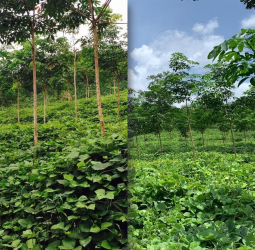
Biological and climatic challenges further undermine production. The Pestalotiopsis leaf disease, first detected in 2019, has now persisted for nearly eight years, causing repeated defoliation and reducing latex yields by up to 40% in affected areas. As an airborne fungal disease, it spreads rapidly in rainy weather conditions.
Climate change has intensified these pressures. Erratic rainfall patterns and prolonged droughts have reduced the number of viable tapping days in some regions, while excessive rainfall in others has accelerated disease spread. Traditional rubber-growing regions with higher rainfall have been hardest hit, whereas non-traditional, drier regions such as Monaragala, Padiyathalawa and parts of Kurunegala have shown relatively better performance. Lower rainfall in these areas reduces fungal spread and increases tapping days per year.
However, expansion into new regions remains constrained by land availability, environmental regulations and uncertainty over long-term returns.
Replanting Slowdown and Investment Gaps
Weak trading conditions and uncertain price prospects have sharply reduced investment in replanting, with replanting levels now significantly lower than a decade ago. Smallholders, in particular, have exited rubber in favour of faster-return crops such as cinnamon, tea and pepper, where income can be generated within two to three years.
The suspension of replanting and rain-guard subsidies following the economic crisis accelerated this shift. Although authorities have indicated that subsidies may resume from 2026, industry players argue that support levels must be substantially increased to reflect current input costs and the long gestation period of rubber, which typically takes 6 to 7 years to yield returns.
At the same time, the sector faces critical research and mechanisation gaps. Investment in modern tapping technologies, disease-resistant clones and yield-enhancing innovations has lagged behind competitor countries. Limited funding for research and development has slowed the adoption of productivity-enhancing technologies that could offset labour shortages and rising wage costs.
Regulatory Pressures and Domestic Linkages
On the regulatory front, the European Union Deforestation Regulation (EUDR) presents both a challenge and an opportunity. The regulation, now postponed until end-2026, requires rubber exported to the EU to be fully traceable and certified as not originating from areas deforested after 2020. While compliance may open premium market access, improving productivity remains essential to sustain the industry amid rising production costs.
Sri Lanka is relatively well-positioned, as rubber cultivation is largely based on replanting rather than new land clearing. Sector assessments indicate that Regional Plantation Companies have largely completed GIS-based land mapping and traceability documentation. Sustained government support for land surveying, digital traceability and smallholder integration will be crucial if Sri Lanka is to leverage compliance as a competitive advantage rather than treat it as a regulatory burden.
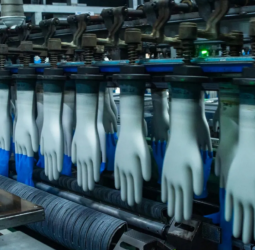
Beyond exports, rubber remains a critical input for Sri Lanka’s domestic tyre, glove and industrial goods manufacturing sectors. These industries are also under stress from rising input costs, global demand fluctuations and external trade barriers. A contraction in raw rubber production therefore has ripple effects across the broader industrial base, employment and value-added manufacturing.
The outlook for the next six months remains subdued, with limited prospects for price recovery or fresh investment and Return on Investment remains critical for both RPCs and potential investors. With rising costs and weak margins, RPCs are currently facing challenges to undertake replanting, intercropping or research and development initiatives at scale.
For 2026 and beyond, the sector’s survival will depend on improving ROI and restoring investor confidence. This will likely require stronger state intervention, including targeted subsidies to share the burden of replanting costs, for research and development and incentives for new technology that would be beneficial in motivating the producers to focus on replanting and development.
Without such measures, stakeholders warn that rubber, a pillar of Sri Lanka’s plantation economy, risks structural decline, with long-term implications for export earnings, rural livelihoods and the country’s downstream manufacturing industries.