

 Breaking News
 A.R.B.J Rajapaksha
 A.R.B.J Rajapaksha
 May 20 2026
 72
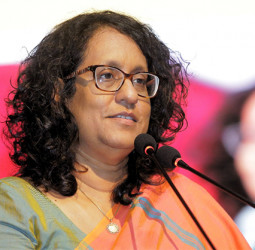
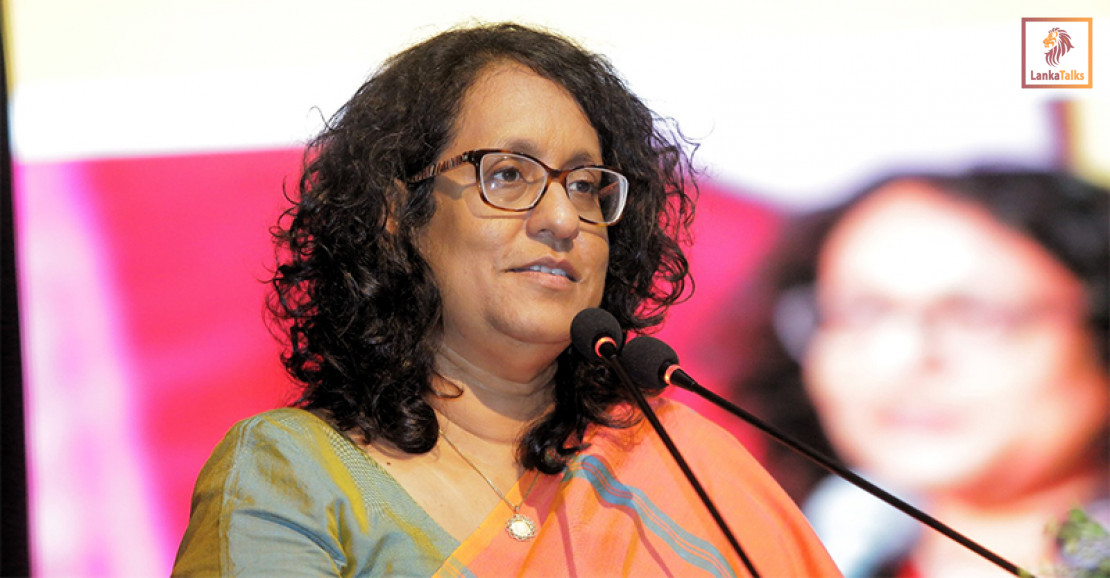
72Prime Minister Dr. Harini Amarasuriya called on the tourism industry not to overlook the domestic market as a vital buffer against ongoing global shocks, urging stakeholders to prioritise high-quality, sustainable experiences over sheer visitor volume.
Speaking at the 13th Sancharaka Udawa exhibition in Colombo, she stressed the need for an inclusive and resilient tourism policy capable of withstanding an era where international crises have become the norm.
“It is important that the industry begins to think not so much in terms of numbers, but in terms of quality,” the Prime Minister stated. She added that “for a small country such as ours, we really need to think in terms of expanding our tourist spots and our tourist destinations locally.”
Her remarks come at a critical time as the industry grapples with severe external pressures. Recent industry data reveals that April tourist arrivals slipped to their weakest point so far in 2026, dropping over 22 percent year-on-year to 135,643 visitors due to mounting geopolitical uncertainty and flight disruptions stemming from the escalating crisis in the Middle East.
Furthermore, shifting dynamics in Sri Lanka’s largest source market, India, pose a potential long-term challenge following Indian Prime Minister Narendra Modi’s appeal for citizens to rethink overseas travel and embrace domestic tourism instead. However, despite this appeal, Indian arrivals have yet to show signs of a slowdown, accounting for a staggering 41 percent of all tourist arrivals to Sri Lanka in the first 13 days of May.
Against this challenging macroeconomic backdrop, Amarasuriya explicitly cautioned the industry against underestimating the local tourist market. While closed borders during the Covid-19 pandemic decimated international arrivals, the domestic traveller served as the ultimate lifeline for hotels and service providers across the country.
Highlighting the ongoing importance of this resilient market segment, the Prime Minister urged stakeholders: “Do not forget the domestic tourists. In down times, domestic tourists have kept this industry going. This is something to cater to, and something our tourism industry needs to accept and promote.”
Her comments carry added weight amid resurfacing complaints of discrimination against Sri Lankan holidaymakers at certain establishments. In recent years, numerous hospitality venues across popular coastal and highland hubs have drawn heavy public backlash for adopting informal ‘foreigners only’ policies, denying entry to locals, or even strategically imposing higher room rates on domestic travellers to actively discourage their patronage during peak seasons.
Pushing back against these industry biases, Amarasuriya pointed out that the local demographic is rapidly diversifying, with domestic tourists increasingly seeking high-end experiences. Embracing this shift, she noted, provides the sector with a reliable fallback against global market volatility.
Furthermore, the Prime Minister advocated for a strategic shift toward responsible geographical expansion to mitigate reliance on traditional hotspots.
By developing untapped locations, Sri Lanka can ease the burden on heavily commercialised areas while distributing the tourism economy more evenly across the island.
To support this transition toward sustainable tourism, the state is integrating the sector into national education reforms to build future-ready human capacity, which includes launching school-level tourism clubs. However, Amarasuriya clarified that the government will strictly focus on macro-level facilitation rather than business operations.
“Finally, the government’s role is to set the infrastructure, the policy, and the regulatory environment,” she explained. “The rest is up to the private sector. You have to drive this industry and invest in it.”
Source - Dailymirror