

 Breaking News
 A.R.B.J Rajapaksha
 A.R.B.J Rajapaksha
 Mar 16 2026
 424
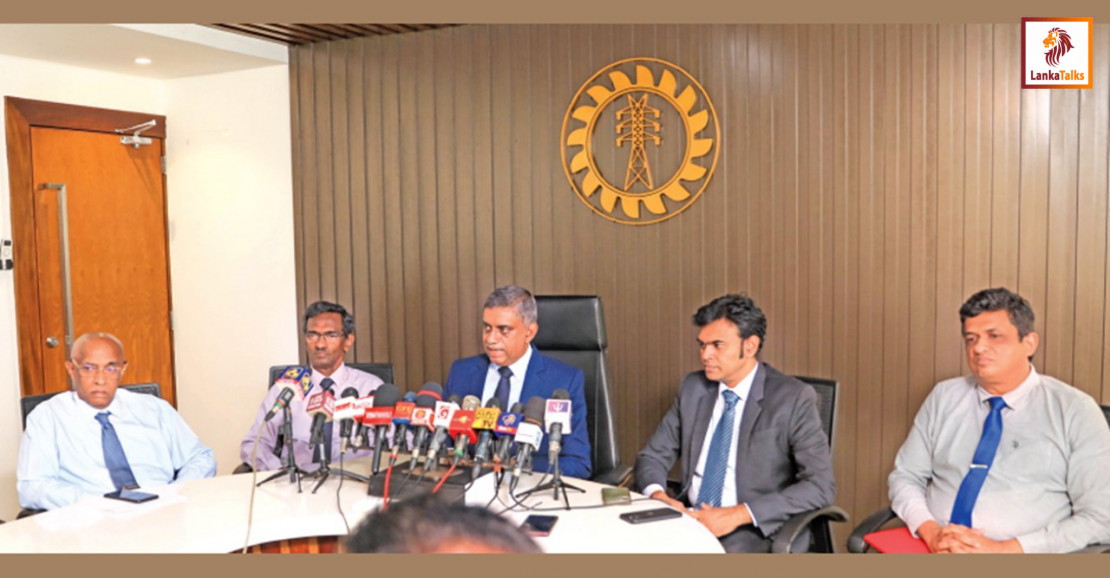
424Sri Lanka plans to attract more private sector investment to the electricity sector through the recent power sector reform process, Chairman of the newly formed National Transmission Network Service Provider (NTNSP), Nusith Kumaratunga, said.
Chartered Accountant Kumaratunga told Sunday Observer Business on Friday, that unlike earlier years, the Government plans to introduce a more transparent, market-oriented, yet consumer-friendly power purchasing process through competitive bidding to meet the country’s growing electricity demand.
He said that, depending on the country’s electricity needs, the Government plans to open the sector to private investment without burdening the Treasury by creating more State-owned power-generating stations through public investment or incentives. The Government is also considering suitable public-private partnership models to fulfil future demand.
“Sri Lanka’s long-delayed electricity sector reforms have been finalised, paving the way for a more transparent and accountable industry structure,” Kumaratunga said.
Kumaratunga said the shares of the National System Operator (NSO), NTNSP, the generation company responsible for hydropower, and the distribution companies will remain fully owned by the Secretary to the Treasury. Other generation and distribution companies, as well as additional transmission licensees, will be open to private investment.
According to him, depending on national power purchasing demand, the Government will permit the private sector to supply electricity to the national grid through a competitive bidding process. He noted that the reforms, which had been delayed for over four decades, came into effect on March 9, 2026.
The reform process — commonly referred to as “unbundling” — was implemented through the Sri Lanka Electricity Act No. 36 of 2024 and the Amendment Act No. 14 of 2025. The amendment introduced two stages of restructuring: the Preliminary Transfer Plan (PTP) and the Final Transfer Plan.

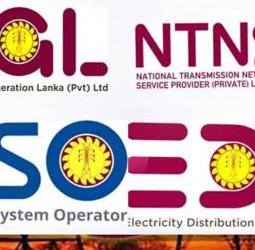
Under the reforms, six companies have been created: the National System Operator (NSO), Electricity Generation Lanka (EGL), National Transmission Network Service Provider (NTNSP), Electricity Distribution Lanka (EDL), Energy Ventures Lanka (EVL), and the CEB Employees Fund. The first four entities will carry out the core activities of the electricity industry.
The National System Operator will be responsible for planning and procuring electricity generation from power producers through a competitive bidding process. It will then sell electricity to distribution companies through the national transmission network operated by NTNSP, making it central to the industry’s technical and operational functions.
The NTNSP will take over the physical infrastructure of the national grid, including high-voltage transmission lines. Shares held by Sri Lanka Energies and LTL Holdings will also be transferred to the company.
Electricity Generation Lanka will function as a technology-driven single power generation company responsible for all hydropower plants, the Lakvijaya Coal Power Plant together with the Lanka Coal Company, other thermal power plants, the Mannar Thambapavani Wind Power Plant, and the Trincomalee Power Company. Electricity Distribution Lanka has been formed by amalgamating the four distribution divisions of the Ceylon Electricity Board (CEB) and will also hold shares in Lanka Electricity Company (LECO).
Energy Ventures Lanka has been set up as a residual entity to manage functions of the CEB that are not allocated to other companies, including generator-hiring activities.
Source - Sunday Observer