


 Breaking News
 A.R.B.J Rajapaksha
 A.R.B.J Rajapaksha
 Mar 09 2026
 998
998On International Women’s Day, much of the conversation focuses on women breaking barriers in boardrooms, businesses, and professional careers. Yet across Sri Lanka, another group of women quietly power a billion-rupee national industry, often from a small stool under an umbrella on a busy roadside.
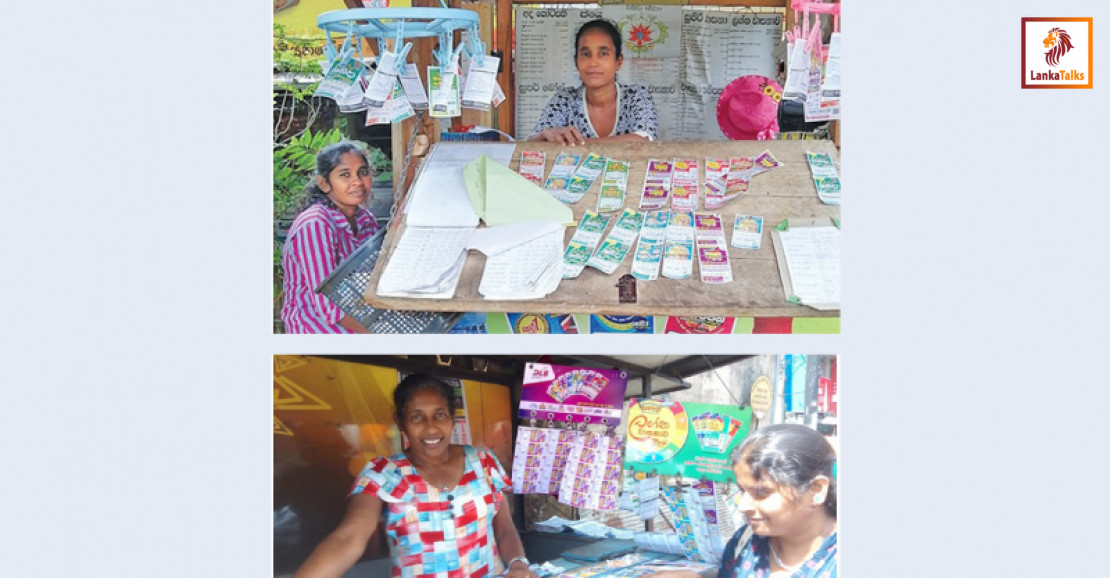
Every day, thousands of women lotterysellers step into the streets of cities, towns, and villages across the island. With a booklet of colourful tickets in hand, they greet strangers with hopeful smiles, call out to familiar faces, and offer something more than a chance to win.
Behind each of these women is a story that rarely gets told. For many, selling lottery tickets is not simply a job but a lifeline. Widows, single mothers, and women from low-income households often turn to this work to support their families and rebuild their lives.
Behind every one of these sellers is a story of survival and determination. Behind their work lies a billion-rupee engine that fuels education and healthcare across Sri Lanka.
A national powerhouse hidden in plain sight
The Development Lotteries Board (DLB) generates tens of billions of rupees in annual revenue, making it one of the country’s most significant public revenue-generating institutions. In recent years, the industry has continued to expand steadily as demand for lottery products grows across the island.
But these numbers represent far more than commercial turnover. Every rupee of profit flows directly to the President’s Fund, which supports a wide range of national welfare initiatives.
Through this fund, Mahapola scholarships help students from low-income families continue their university education, while life-saving medical treatments are funded for patients who would otherwise struggle to afford them. In many ways, these opportunities begin with a simple ticket purchased from a roadside seller.
The scale of this network is remarkable. Across Sri Lanka, women vendors collectively sell well over a million tickets each day. For many of them, the daily sales provide a modest but steady income that supports their households. At the same time, their work generates several times that value for the national lottery system.
Multiply that effort across thousands of sellers operating in cities, towns, and villages, and the impact becomes clear. What appears to be a small daily transaction on a street corner ultimately feeds into a national system that supports education, healthcare, and social welfare.
This is what makes lottery sellers more than vendors. They are vital links in a chain that stretches from roadside stalls to university lecture halls and hospital wards.
Stories of grit and growth
Behind the statistics are women with extraordinary personal journeys. Their lives show how the lottery trade is not just about selling slips of paper. It is about resilience, adaptation, and climbing upward from poverty.
Take Deepa Priyadarshani (55). She began by selling only 50 or 60 tickets a day from a small wooden box. Her family lived in extreme poverty, but she refused to give up. Today, Deepa is no longer a lone street seller. She is a dealer managing eight assistants. She has turned what once looked like survival work into a small business that supports multiple families. Or consider Priyanthi Manel (53) from Gampaha. Her husband was a lottery seller, but tragedy struck when he passed away suddenly while still at work. Instead of walking away, Priyanthi picked up where he left off. She battled grief and hardship, determined to keep going for the sake of her family. Today she is the second-highest seller in her district. Her story shows how women step into roles of responsibility and not only maintain them, but rise to the top.
Another is K. Chandra Kanthi (54), who faced crushing financial debts. Her husband, overwhelmed by heavy loans, gave up the business. Chandra Kanthi refused to surrender. She took over the ticket sales herself. Slowly, she paid off every loan and built a steady income. From the depths of crisis, she created stability for her family.
Back in Dambulla, Deepa’s story shines even brighter. Once the girl with a wooden box, she is now the number one lottery seller in her district, competing directly with men and winning. She lives in a modern home, drives her own car, and enjoys a standard of living she once could not have imagined.
These stories are not rare exceptions. Across Sri Lanka, many women have turned the daily grind of ticket selling into pathways of dignity, resilience, and sometimes even prosperity.
The scale of women’s contribution
There are about 19,000 registered lottery sellers in the country. Of these, 66% are men and 34% are women. While men outnumber women, women stand out for the odds they overcome. Many are widows, single mothers, or housewives who turned to selling to feed their families. They work in the rain, in the hot sun, and amid stiff competition.
Yet, they are not simply earning for themselves. Their efforts sustain an industry that generates billions for the state. Some of the most successful women even employ assistants, creating micro-jobs in their communities. Their presence guarantees that lottery tickets are available in every corner of the island, from Colombo’s crowded streets to remote rural villages.
Tickets that build futures
When looked at closely, women sellers are more than participants. They are the spirit and face of the lottery industry. What makes their role unique is how directly their work connects to national welfare. The President’s Fund uses lottery profits to cover university scholarships and life-saving medical costs. This means that every ticket sold could be a page in a student’s future or the difference between life and death for a patient.
For the women sellers, this connection is a source of pride. They know that their long days on the roadside are not only for their families but also for the nation. Few jobs in the informal sector have such a direct and visible link to national development.
The hardships they endure
Life as a lottery seller is far from easy. The income provides a modest but vital livelihood for many families, often covering the day-to-day necessities of food, household expenses, and children’s schooling. Yet it leaves little room for savings or financial security.
The work also demands constant presence. Sellers spend long hours at their roadside spots, knowing that the day’s earnings depend entirely on the tickets they manage to sell.
There are also the realities of working outdoors. Sellers sit through scorching heat, sudden showers, and sometimes unfriendly treatment from passersby. Many carry family responsibilities on top of this, rushing home to cook, care for children, or tend to elderly relatives after long hours of selling.
And yet, despite all these hardships, women persist. For many, this is the only available source of income that does not require special qualifications. For others, it is a stepping stone to something greater, as Deepa and Chandra Kanthi have shown.
Breaking stereotypes
The rise of women sellers also challenges traditional stereotypes. Across many parts of the country, women are not just competing with men but increasingly outpacing them in sales. Their achievements show that women can excel even in areas where men have traditionally dominated. By proving themselves on the ground, these sellers are quietly reshaping the narrative of women in Sri Lanka’s economy. They show that entrepreneurship does not always need offices or start-up capital. Sometimes it begins on a stool with a handful of tickets.
Looking ahead
The lottery industry continues to grow steadily, and with that growth, the role of women sellers is becoming even more important. Across the island, their daily effort keeps the system moving, connecting communities to a national network that supports public welfare.
With a little more support, their impact could grow even further. Training in sales and financial literacy, easier access to small loans, and simple recognition of their achievements could help many of these women strengthen the small businesses they have built for themselves. Their entrepreneurial spirit is already clear. With the right encouragement, it could take them even further.
On Women’s Day, these sellers deserve recognition not only for their resilience but for the quiet role they play in powering a national system of opportunity. They may not appear in boardrooms or business magazines, yet their daily work sustains a multi-billion-rupee industry that supports scholarships, healthcare, and public welfare across Sri Lanka.
More than sellers
At first glance, a lottery seller may appear to be simply offering a chance at fortune. But look a little closer, and you will see something far deeper. You will see stories of survival, families held together through difficult times, and women building dignity through honest work. You will also see a quiet chain of impact that connects a simple ticket to a student’s scholarship or a patient’s life-saving surgery. The women behind Sri Lanka’s billion-rupee lottery industry are far more than sellers. They are breadwinners, entrepreneurs, and quiet nation-builders whose contribution unfolds every day on our streets and in our villages.
From Deepa’s wooden box to Priyanthi’s courage after tragedy, from Chandra Kanthi’s determination to overcome debt to the thousands of others who work patiently in sun and rain, their journeys tell a larger story about resilience and perseverance.
On this Women’s Day, their work deserves to be seen for what it truly is. The lottery industry is not only about chance. It is also about determination, resilience, and the quiet strength of Sri Lankan women who turn simple tickets into futures for families, communities, and the nation.
The writer is AGM Marketing at the Development Lotteries Board.
Source - Sunday Observer