


 Breaking News
 Krishani
 Krishani
 Nov 10 2026
 17
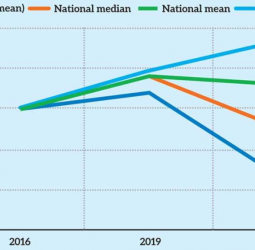
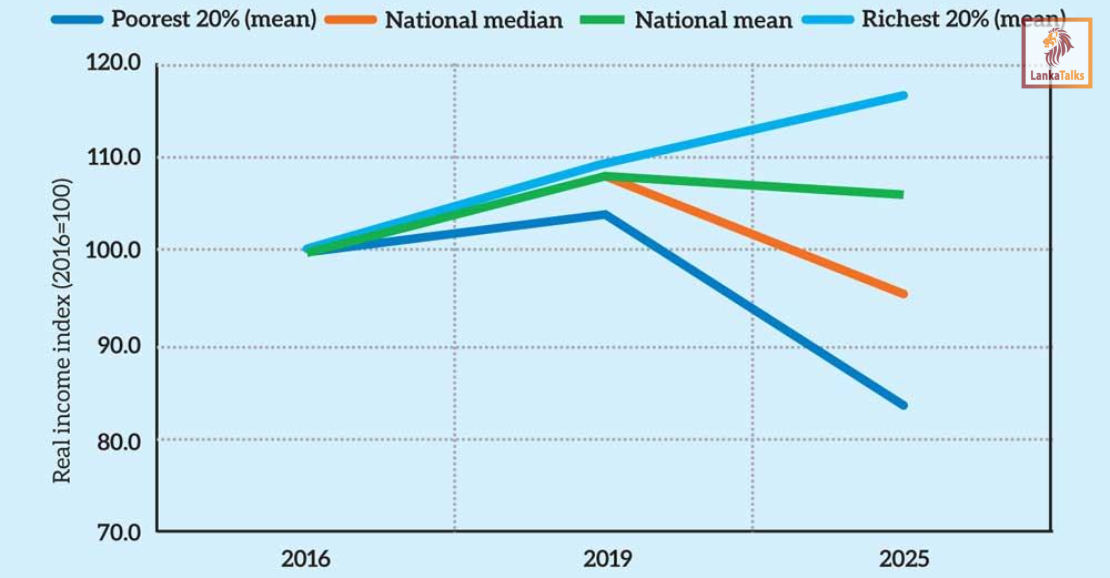
Sri Lanka’s poorest fifth of households lost 16.4 percent of their average monthly income in real terms between 2016 and early 2025, while the richest fifth gained 16.5 percent, widening the income gap, as poverty returned to its level of nine years earlier.
The richest fifth earned nearly 15 times as much as the poorest fifth in early 2025, up from about 11 times in 2016, according to an analysis by Institute of Policy Studies of Sri Lanka Research Fellow Dr. Pulasthi Amarasinghe.
Dr. Amarasinghe drew on the Census and Statistics Department’s final household survey results for 2016 and 2019 and the preliminary findings for 2025.
At the 2016 prices, the average monthly income for the poorest fifth fell to Rs.12,403, from Rs.14,843, while that of the richest fifth rose to Rs.184,129, from Rs.158,072.
The divide widened most sharply after 2019, a period that included the COVID-19 pandemic and Sri Lanka’s economic crisis. The real income fell 19.6 percent for the poorest fifth over that period and rose 6.8 percent for the richest.
The same survey showed that an estimated 16 percent of Sri Lankans lived below the national poverty line in early 2025, up from 14.3 percent in 2019 and back at the 2016 level.
Dr. Amarasinghe said the gap between the household surveys likely concealed a higher poverty rate during the crisis. He cited the revised World Bank estimates, based on a separate poverty line of US $ 4.20 a day, that suggest poverty may have peaked at around 20 percent between the two surveys.
The national income figures also showed how differently the typical household fared. The average monthly household income rose 93 percent in nominal terms between 2016 and early 2025, from Rs.62,237 to Rs.120,266. Once inflation was taken into account, the increase was just 6 percent. Contd on page 11
Sri Lanka’s poorest
Over the same period, the real median monthly household income fell 4.3 percent to Rs.41,623. The median, which marks the midpoint of the income distribution, was 11.1 percent below its 2019 level by early 2025, wiping out the gains the households at that midpoint had made before the pandemic.
The average household income was nearly 59 percent higher than the median in early 2025, compared with 43 percent in 2016.
Dr. Amarasinghe said the widening gap and the growing distance between the richest and poorest fifths pointed to a more uneven distribution of income.
The full 2025 survey results will help establish whether the Gini coefficient, a broader measure of inequality, also rose.
Dr. Amarasinghe argued that Sri Lanka’s return to economic growth should be judged by whether it raises the households’ purchasing power, creates more productive jobs and leaves the economically vulnerable families better able to withstand the future shocks.