


 Breaking News
 Puvanya
 Puvanya
 Oct 07 2026
 31
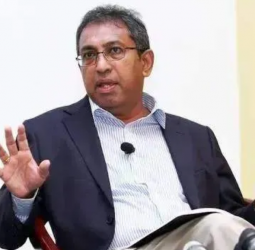
31Sri Lanka may face risk in the event of its foreign debt increasing, however its Medium Term Debt Management Strategy (MTDS) is sufficient to steer it towards reducing its foreign debt dependence, Deputy Minister of Finance and Planning Dr Anil Jayantha Fernando said, speaking in parliament yesterday (6).
“We have prepared the Medium Term Debt Management Strategy. The debt repayment strategy is also there, and we also have prepared the debt structuring plan, because when we make debt sustainable, there are two important things to consider; one is the structure of debt,” Dr Fernando said, referring to the Public Debt Management Office’s (PDMO) formulated MTDS for 2026 – 2030, in accordance with the Public Debt Management Act No. 33 of 2024.
“If foreign debt continues to increase, there actually is the possibility of a crisis arising. It is with the intention of diminishing that challenge that there is a plan within this to reduce the foreign debt composition.”
The MTDS, which had been released in 2025, details repayment schedules, targets and specific plans for foreign debt obligations in 2030. Crucially, the document details that Sri Lanka aims to source 90% of its financing domestically, and 10% externally. Between 2027 and 2030, Sri Lanka expects to see its domestic share of debt dependency to be maintained at 85%, while external financing is to make the remainder 15%.
Meanwhile, the PDMO’s Annual Borrowing Plan for 2026 states that the Government plans to meet 88% of its gross borrowing requirement through rupee-denominated bonds, with the remaining 12% expected to be financed through FX-denominated bonds.
Within the MTDS published by the PDMO, the debt office notes that it intends to see average debt maturities of Treasury bonds to extend from 6.8 years to 8 years by 2030, which involves shifting issuance toward longer-term instruments like bonds and away from short-term Treasury bills. Treasury bills’ share of total debt is targeted to fall from 10.7% to 5%, during this time period.
“There is also the intention to increase domestic debt, with the bonds as a target,” Dr Fernando said.
Among the key performance indicators listed in the MTDS, the public debt office expects to see the interest payment-to-revenue ratio lower from 52.2%, as at the end of 2025, to 35% by 2030. “The other thing is the interest rates when it comes to debt repayments. The directions to reduce these interest rate repayments is also included within these discussions,” Dr Fernando said.
Dr Fernando’s comments were made in the midst of public debate over the future of Sri Lanka’s fiscal and debt sustainability, with the end of the IMF’s EFF programme closing in by March 2027, and the IMF’s advice for the Government to establish clear medium-term fiscal and debt parameters.