


 Breaking News
 Tracy
 Tracy
 Nov 12 2026
 12
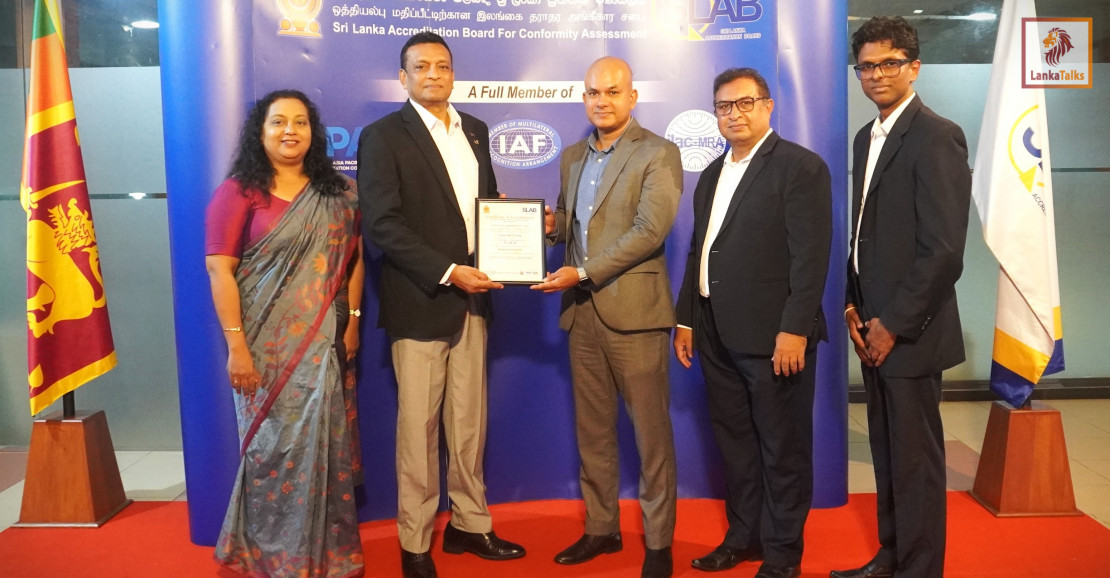
Control Union Sri Lanka’s laboratory has received ISO/IEC 17025:2017 accreditation from the Sri Lanka Accreditation Board (SLAB) for pesticide residue analysis, giving producers, buyers and regulators independent proof that its results can be relied on. It is the first of four SLAB accreditations the laboratory is working toward.
A single failed pesticide test can hold up an entire shipment or pull a product off the shelf. Buyers in Europe and other regulated markets enforce strict maximum residue levels, and a consignment that fails can be rejected, delayed or returned at heavy financial cost. Results from an accredited laboratory carry more weight with buyers and regulators, which helps Sri Lankan producers settle questions quickly and avoid repeat testing in other countries.
That weight comes from who grants the accreditation. SLAB is Sri Lanka’s national accreditation authority and is internationally recognised through mutual recognition arrangements with the International Accreditation Forum (IAF), the International Laboratory Accreditation Cooperation (ILAC) and the Asia Pacific Accreditation Cooperation (APAC). Since January 2026, that global recognition has been consolidated under Global Accreditation Cooperation Incorporated (Global ACI), which ensures international acceptance of accredited test reports and certificates within their recognised scopes.
The laboratory screens for approximately 800 pesticide residues using LC MS/MS and GC MS/MS, two mass spectrometry technologies that separate and identify compounds at very low concentrations. The range includes substances that are notoriously difficult to detect, among them glyphosate, glufosinate and ethylene oxide, along with other specialised analytes.
The accredited scope covers tea, spices, fruits, vegetables, coconut milk and water, a range that reflects what Sri Lanka grows, eats and ships to the world. Methods are validated and aligned with EU SANTE guidelines, the European quality control framework for pesticide residue analysis. SLAB assessed the laboratory against ISO/IEC 17025, the international standard for testing laboratories, covering its methods, equipment, staff competence and quality system.
“Producers and buyers need to know that a result issued here will be accepted, whether the product is headed for a shop in Colombo or a port in Europe,” said Roshan Ranawake, Managing Director of Control Union Sri Lanka. “This accreditation is independent confirmation that our methods and our people meet that standard. It is the result of sustained discipline from our laboratory team, and I am proud of what they have achieved.”
The remaining three SLAB accreditations cover chemical testing for food, water and heavy metals, microbiology testing by conventional methods, and microbiology testing by PCR. Only the pesticide residue accreditation has been issued so far, and Control Union Sri Lanka expects to share updates as each of the others is confirmed.
The laboratory opened in February 2026 as the country’s first food testing laboratory using PCR and the 28th within the global Control Union laboratory network. The accreditation is the first independent confirmation of the standards the facility was built to meet, giving Sri Lankan producers and the businesses that buy from them a stronger footing in local and overseas markets.
More information on Control Union Sri Lanka’s testing services is available at srilanka.controlunion.com/service/testing.