


 Breaking News
 Krishani
 Krishani
 Nov 26 2026
 35
Identity fraud has become more sophisticated globally, and businesses urgently need greater security and confidence specially when signing and managing agreements. 56 percent of companies (over 1000 large companies) from United States, Australia, New Zealand and other parts of the world surveyed recently have experienced identity fraud in the past year, which is a staggering number, a New Zealand based, leading document management and PDF software company noted.
As per the survey, 94 percent of companies believe that agreement workflows are vulnerable to AI-powered fraud, as document manipulation and AI-generated signatures are widespread. Though AI brings a lot of capabilities to organisations and to people’s lifestyle and to businesses, there is also the flip side of it. Therefore, companies should ensure their customers are protected from these threats with proven identities in the form of verifiable digital credentials, said Chief Commercial Officer of Lumin, Joel Foster in Colombo last week.
One of the rising threats we have today is ‘deepfakes’. Companies particularly in sectors such as banking, finance, legal, property, insurance, and consultancy are highly targeted. Apart from obvious things like operational disruption, delayed work, reputational damage, the financial losses caused by an identity fraud is massive, Foster added.
“Identity should be proven, not assumed. An electronic signature records that a signing action has taken place, but it does not necessarily prove who was behind it. Access to an email inbox, phone number or passcode isn’t the same as verified identity. ‘Verifiable credentials’ are extremely important. This is the next step in digitization and transformation. We are seeing more of that happening globally. Digitization of identity gives total control to your identity and your data, and you control the sharing of it. Certificators are a stepping stone in this direction,” Foster explained.
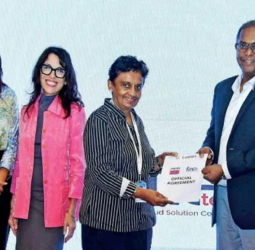
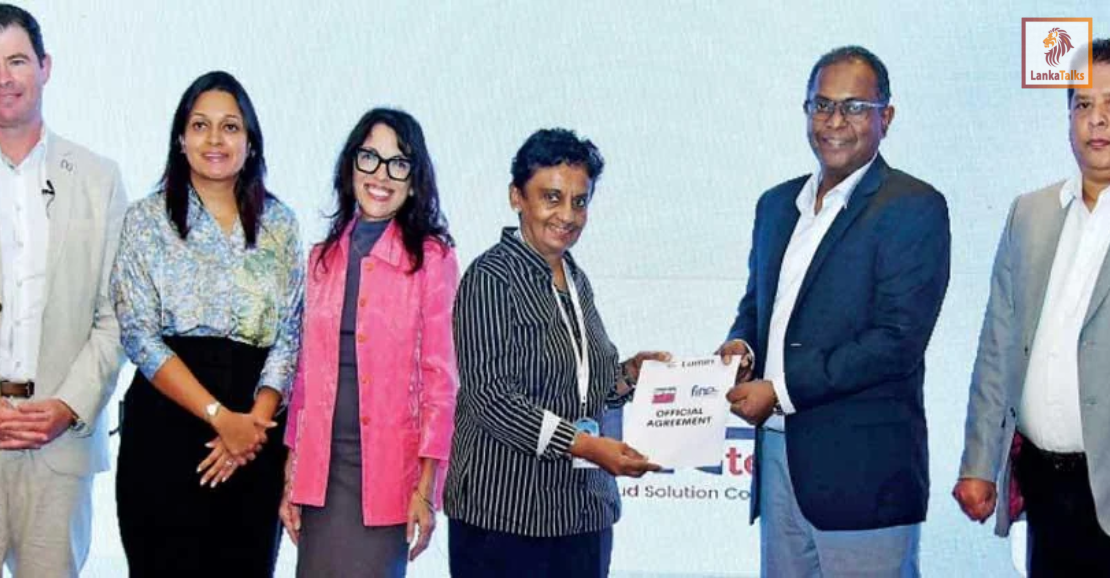
Foster shared these views at the event held at Amari Colombo to announce the strategic partnership between Lumin, Finetech and LankaPay to introduce secure, legally binding digital signature solutions to businesses and government institutions across Sri Lanka. The partnership brings together Lumin’s digital signature technology and LankaPay’s national payment and identity infrastructure, with Finetech leading the integration. The collaboration aims to establish a national standard for secure and authenticated digital signatures across Sri Lanka’s enterprise sector.
Commenting on the partnership, Lumin’s Head of Global Partnerships Nancy Ridge said, “We are delighted to partner with Finetech and LankaPay to bring secure digital signing capabilities to businesses and institutions in Sri Lanka. By combining Lumin’s global digital document technology with trusted local infrastructure, we aim to simplify the way organisations manage agreements and approvals, enabling them to operate more efficiently and confidently in an increasingly digital world.”
Chief Executive Officer of LankaPay Channa De Silva said, “This partnership is an important step in strengthening Sri Lanka’s digital ecosystem by extending trusted digital infrastructure beyond payments into document authentication and signing. By bringing together global technology and national infrastructure, we aim to support businesses and government institutions in adopting secure, efficient and compliant digital processes, contributing to the country’s broader digital transformation agenda.”
Deputy Chief Executive Officer of Finetech Consultancy Chamathka Fernando added, “As the integration partner, Finetech is pleased to bring together the capabilities of Lumin and LankaPay to deliver a practical digital signing solution for the Sri Lankan market. We look forward to helping organisations of all sizes embrace digital transformation through secure, seamless and scalable technology.”
The solution will also help accelerate business processes by reducing turnaround times for contracts, approvals and onboarding. At the same time, minimising paper consumption and manual document handling will contribute to lower operational costs and a reduced environmental footprint.
Sharing views with Mirror Business on the level of digital transformation Sri Lanka and other South Asian countries have achieved currently, Foster said Sri Lanka is positioned in the middle, but the associated challenges faced are no different to anywhere else seen in the world. “India in the meantime is doing some amazing things in this space. They have the ability. I am very impressed with what’s going on there, and we are starting to do more work with them.”