


 Breaking News
 Krishani
 Krishani
 Nov 27 2026
 16
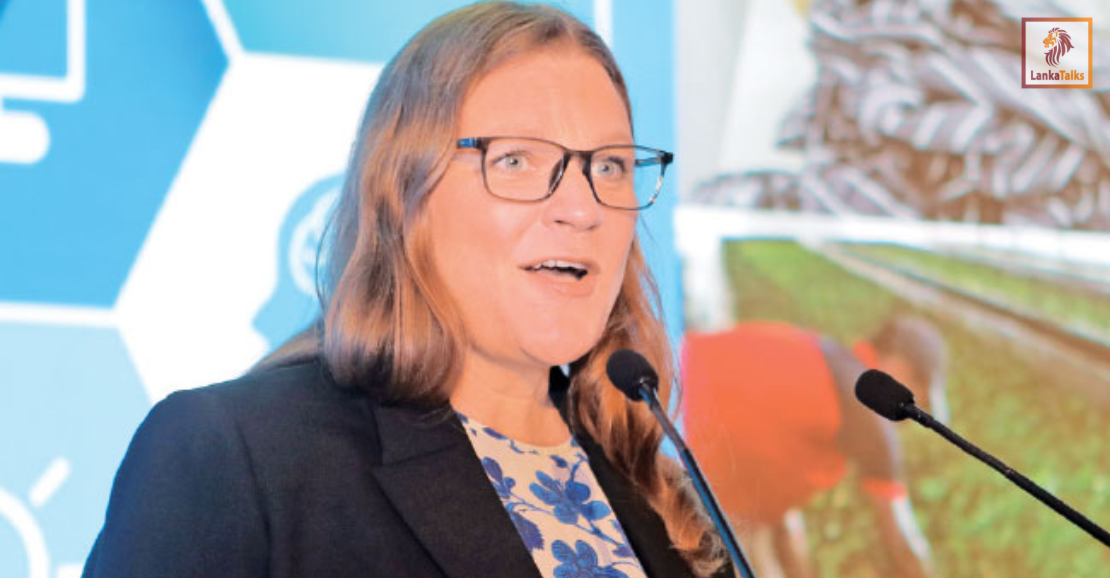
Sri Lanka’s recovery from its economic crisis has reached a critical turning point where macroeconomic stability alone is no longer enough to guarantee long-term prosperity, opined ADB Country Director for Sri Lanka Shannon Cowlin at an Asian Development Bank (ADB) forum on trade and export competitiveness held yesterday in Colombo
Hosted under the ADB’s Serendipity Knowledge Programme (SKOP), the bank’s flagship knowledge platform for Sri Lanka the discussion, titled “From Trade Reform to Export Growth: Enabling Sri Lankan Firms to Compete Globally,” brought together government officials, private sector leaders, researchers, and international experts to examine how local enterprises can strengthen their foothold in global markets.
Cowlin noted that Sri Lanka has made notable progress restoring macroeconomic stability in recent years, creating a stronger foundation for growth. However, she stressed that the next stage of recovery must rely far more heavily on exports, investment, and productivity. For a country carrying significant external debt, expanding exports is especially vital because export earnings bring in foreign exchange without adding to debt burdens, strengthen external buffers, and support productive jobs
Despite this, Sri Lanka’s export performance has trailed regional peers for decades, remaining concentrated in a narrow set of traditional sectors alongside low levels of foreign direct investment. Cowlin noted that high import protection, policy uncertainty, and regulatory and institutional bottlenecks have long held back export diversification and investment in competitive industries. Meanwhile, global trade rules and market dynamics are shifting rapidly, she said.
The Country Director said major economies are moving ahead with comprehensive trade agreements—such as negotiations concluded earlier in 2026 between India and the European Union on a major free trade agreement meaning Sri Lankan exporters risk losing ground to competitors that secure preferential market access. At the same time, buyers increasingly demand stricter standards covering quality, traceability and sustainability.
She also noted that Sri Lanka has taken steps to align its strategy with these realities, including launching the National Export Development Plan (2026–2030) earlier in 2026 to guide export diversification, and pursuing accession to the Regional Comprehensive Economic Partnership (RCEP). The ADB has supported the export development plan under its Trade, Investment, and Industry Development Programme and is providing technical assistance for RCEP accession
“Greater market access does not automatically translate into greater exports. It must be accompanied by domestic reforms that reduce trading costs, improve the investment climate, and help firms innovate, diversify and become more productive,” Cowlin added.