

 Breaking News
 LankaTalks
 LankaTalks
 Mar 18 2026
 466
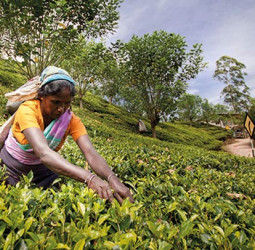
466Sri Lanka’s tea industry is navigating a deepening crisis as prolonged conflict in West Asia has jeopardized the island nation’s top export commodity, tea.
Since the US-Israel attack on Iran on February 28, Red Sea turmoil has transitioned from a logistical delay to a systemic threat.
High-value teas are becoming unsellable, and Port of Colombo warehouses are reaching maximum capacity, top exporters say.
This geopolitical deadlock arrives at a time when the 1.5 billion dollar export industry is battling the decay of colonial-era labour models, fuel shortage, and climate instability.
“Ceylon Tea” maintains a diverse global footprint, with its export strategy currently focused on sustaining these relationships with the main buyers who are traditionally concentrated in West Asia, the Commonwealth of Independent States (CIS), and increasingly, East Asia and the European Union.
The ongoing conflict has disrupted major transit hubs like Dubai and Doha, impacting the speed and cost of reaching traditional buyers in the region.
The instability in the region threatens quite a significant portion of Sri Lanka’s tea exports.
Anil Cooke, Managing Director of Asia Siyaka Commodities PLC, said the list of countries that are being bombed at the moment across the Gulf are the key market for Sri Lanka’s tea, including Iraq, Iran, Saudi Arabia, and the UAE.
“When you add North Africa to that list of Middle Eastern countries and consider all the tea being shipped through the Red Sea, we’re talking of about a 60 to 70 percent impact to our total (tea) exports,” Cooke told EconomyNext.
Painful Impacts
Sri Lanka has been paying a 251 million dollar crude import due to Iran with tea through a barter system agreed with the central banks of both countries as US sanctions have prevented all countries trading with Tehran in US dollars.
“The impact Iran has on the market is disproportionate to the volumes purchased. Their absence or reduced demand creates immediate price corrections,” Cooke said.
And price correction has been painful for local producers and businesses.
The prices at the first auction after the start of West Asia conflict fell 4.3 percent, while volume sold also dropped sharply by 13.1 percent, official data showed.
Prices of individual stocks in listed tea firms have fallen as worse as 30 percent.
For major exporters, the crisis has transitioned from delays to a “total blockage”, an official at Sri Lanka’s largest tea exporter, Akbar Brothers, told EconomyNext.
“We can buy the tea, we can process the tea, pack the tea, everything, but we can’t ship,” the official, who asked not to be named, said.
“It’s all ready for shipment, but we can’t ship. So our warehouses are being occupied with all packed and ready cargo.”
Industry stakeholders say some shipments are currently stranded or offloaded at interim ports, while several exporters currently have goods in transit that are facing significant disruptions.
“In certain instances, shipping companies are even asking exporters to retrieve their cargo independently,” Cooke said.
And that has now increased the insurance premium for export cargoes, which will make Sri Lanka tea expensive in the global market.
Unaffordable Premium
The crisis, which effectively paralyzed the Strait of Hormuz and the Suez Canal, has forced insurers and shipping lines to implement emergency measures that directly threaten the competitiveness of Sri Lanka’s key export sectors.
Premiums for vessels transiting high-risk zones have reportedly surged by over 1,000 percent in some instances.
For high-value tankers or container ships, insurance rates that were previously around 0.25 percent of the vessel’s value have spiked to as much as 1.5 to 3 percent, adding millions of dollars in costs per journey.
Major shipping lines (including Maersk, MSC, and Hapag-Lloyd) have introduced Emergency Conflict Surcharges and War Risk Surcharges.
These fees typically range from 1,500 to 2,000 dollars per 20-foot container (TEU) and up to 3,000 to 3,500 dollars for 40-foot containers, significantly increasing the landed cost of Sri Lankan goods.
Since shipping costs and insurance surcharges are rarely borne by the importer during a crisis, Sri Lankan exporters must often absorb these fees themselves to keep their products price-competitive.
This is causing a weekly revenue loss estimated between 10 million and 15 million dollars for the tea industry alone.
To avoid the Strait of Hormuz and the Suez Canal, vessels are rerouting around the Cape of Good Hope. This adds 15–20 days to transit times for shipments to Europe and the US, disrupting just-in-time delivery schedules and increasing fuel consumption costs.
The volatility has led to delayed payments for shipments already in transit.