

 Breaking News
 Natasha
 Natasha
 Jan 06 2026
 592
592We Sri Lankans take pride in our education, and with good reason. Our literacy rates are high, schools are widespread, and students consistently achieve impressive exam results. But one question is rarely asked: does our education system truly prepare young people for the world they are about to enter?
The world is changing, and fast. Automation, artificial intelligence, and technology-driven industries are reshaping how we work, create, and solve problems. Skills that served previous generations: memorizing, repeating, and merely following instructions, are no longer enough. Today, success demands curiosity, creativity, problem-solving, and the ability to learn continuously. In the modern age, access to such knowledge is increasingly immediate: often through the device in your hand, the screen on your desk, or the podcast on repeat.
Somehow, there’s a part Sri Lanka still struggles to accept no matter how much we advance in our education: our education is no longer just about textbooks. Digital learning, especially STEM education on online platforms, must become the new norm, and that it is not a threat or a replacement for our schools or teachers.
But having that conversation? That’s a bridge too far for a nation still scared of the new.
A Sri Lanka Left Behind
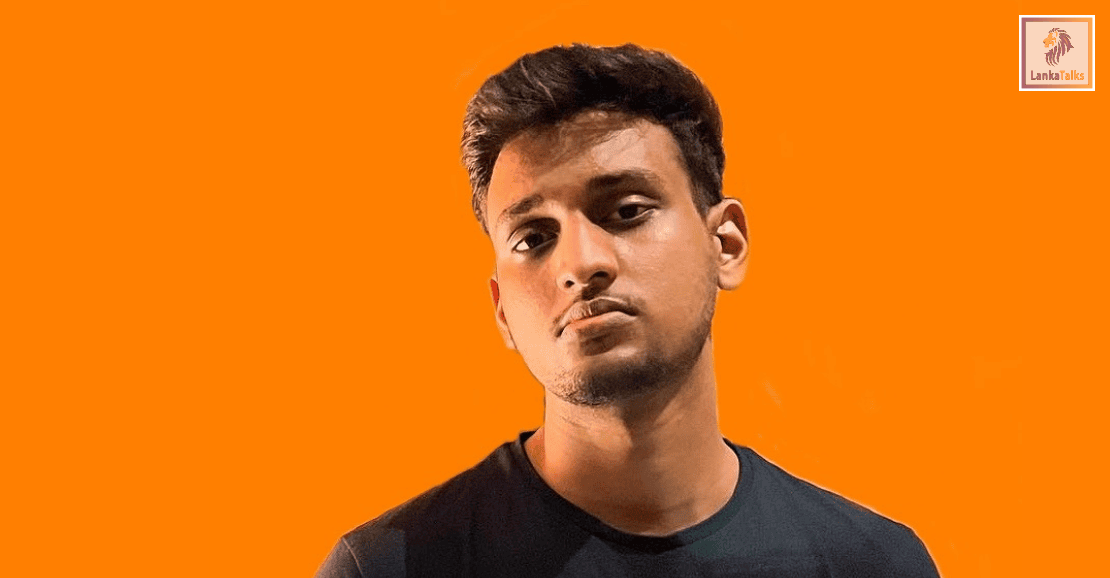
In case you’re wondering who I am and why I’m raising the alarm, I am Minuk Weerakoon, and I make videos about the things that make me curious; mostly technology, AI, and science (in simple terms).
On why I am raising the alarm of Sri Lanka falling behind, let me paint a picture of an alternate reality. Imagine a hypothetical Sri Lanka that falls behind in STEM. Across Asia, countries like China, India, and South Korea aren’t just teaching STEM - they’re making it alive, interactive, and culturally meaningful. Children there watch videos in their own language, see examples from their own neighborhoods, and try experiments that feel real. They don’t just memorize. They experiment, they create, and they build confidence to tackle problems.
Alternatively, in Sri Lanka, it’s different. Most of the STEM content the students or viewers see online comes from somewhere far away. A chemistry experiment using lab equipment you’d never find in a typical Sri Lankan school, or a coding tutorial referencing apps nobody here uses. Sure, it looks cool, but it doesn’t click. Kids struggle to connect what they read in textbooks to the world around them. And when they can’t see the connection, their curiosity dries up.
And that’s not just a theory; it has consequences. Jobs in AI, robotics, renewable energy, even agriculture, are exploding globally. But our students? They might know the formulas, the theories, the laws—but without exposure to real-life, locally relevant STEM examples, they lack the confidence to create, experiment, and innovate. Local problems—from making farming more tech-savvy to solving traffic chaos in Colombo—may stay unsolved because nobody showed them how STEM can work here. Startups struggle, entrepreneurship slows, economic growth lags.
Sri Lanka on the Global STEM Map and its Challenges
While that hypothetical scenario may be alarming, it is even more so to imagine the consequences if no action is taken. STEM is the language of this new world. Science, technology, engineering, and mathematics are no longer isolated subjects confined to textbooks or exam halls. They are interconnected, dynamic, and integral to how industries, economies, and societies function globally. Around the world, STEM learning is thriving—every platform, every corner of the internet is alive with curiosity-driven experiments, coding challenges, AI tutorials, and science explainers.
Sri Lanka, however, is still finding its footing in this global surge. We have incredible potential, bright, creative minds, a strong foundation in education…but visibility is limited. Too often, our students rely on content produced elsewhere, in contexts that feel distant or abstract. What they see online doesn’t always speak to their lives, their environment, or the challenges they face here at home.
The biggest gap in Sri Lanka’s STEM content isn’t the lack of knowledge. It’s relatability. Students often see science or technology lessons as distant, abstract, or disconnected from their daily lives. Most online content comes from abroad, using examples, references, and contexts that feel foreign. A coding tutorial showing how to optimize a U.S. delivery app might impress, but it doesn’t inspire a Sri Lankan student to see how they could build solutions for their own communities.
Another challenge is consistency. There are talented creators, but not enough of them are producing content regularly or thinking about long-term impact. Many professionals shy away from creating videos or don’t know how to communicate complex ideas in simple, engaging ways. Even when content exists, it can be too long, too technical, or too disconnected from what students experience in school and at home.
These gaps directly affect engagement. Students might watch a video once, be fascinated, and then move on, never returning because it didn’t feel relevant or accessible. Without consistent, relatable, and locally tuned content, STEM remains something to learn from textbooks, not something to explore, experiment with, or feel passionate about.
A Boost for Local STEM Creators
One way Sri Lanka can start closing the gap in STEM education is by supporting creators who make content relatable and relevant to local students. TikTok’s recent launch of the STEM Feed in Sri Lanka is a concrete step in that direction. The platform now provides students with short, interactive videos that connect science, technology, engineering, and mathematics to the realities of their daily lives.
Equally important is the focus on building the capacity of local creators. TikTok is also partnering with Sri Lankan educators and content makers, helping them learn how to communicate complex ideas clearly, creatively, and in ways that engage young audiences. These creators are not just repeating textbook lessons, but rather are showing how STEM is alive in the world around students. With guidance, mentorship, and the tools to produce consistent, accessible content, they can inspire curiosity, experimentation, and confidence among learners.
The impact of this is more than just online learning. By creating locally relevant, culturally meaningful content, initiatives like the STEM Feed help bridge the gap between theory and practice. Students are encouraged to experiment, ask questions, and see that STEM is not distant or abstract; it is something they can explore, build, and apply in their own communities. In a country where many young people still rely on content produced abroad, this is a meaningful step toward nurturing a generation of thinkers, creators, and problem-solvers ready to tackle Sri Lanka’s challenges.
Catching Up and Leaping Forward
So, if we’ve seen how far behind we could fall, the next question is obvious: what do we actually do about it? How do we help Sri Lanka catch up in this race toward localized STEM content?
First, we need creators—real, passionate people—who can turn curiosity into stories that kids can relate to. Not just repeating textbook lessons, but showing how science, technology, and engineering exist in their everyday world. Imagine a video showing how math explains the geometry of a cricket shot, or how physics principles help build better kites for Vesak. That’s the kind of connection that sticks, that sparks curiosity, that makes learning alive.
Second, platforms like TikTok are a goldmine for this, but creators need guidance and support. They need to understand not just the science they’re teaching, but the audience they’re speaking to. What hooks attention? What examples resonate with kids growing up in Colombo, Jaffna, or Kandy? How can content be short, visual, fun, yet meaningful?
Finally, schools, educators, and parents need to embrace this. STEM can’t be confined to classrooms and textbooks anymore. Encourage kids to explore content online, experiment at home, try out tutorials, ask questions, and share what they discover. Celebrate curiosity, not just grades.
It’s not magic, and it’s not about replacing schools. It’s about bridging the gap between what students learn in theory and what they experience in the world around them. If we do this, Sri Lanka won’t just catch up—it can become a hub of creativity and STEM innovation, with kids growing up confident, curious, and ready to shape the future.
Wake Up, Sri Lanka: The Future Won’t Wait for Us
Sri Lanka is on the brink of being left behind. While the rest of the world races ahead with innovation, automation, and AI, our youth risk entering a job market and a society they are unprepared for. What we take pride in today—high literacy, exam results, widespread schools—will not protect us tomorrow. Complacency is the greatest threat to our future.
The good news? This crisis is preventable. The tools, technologies, and digital platforms to equip our students with the skills they need are already at our fingertips. STEM, when made interactive, accessible, and relevant, can turn classrooms into launchpads for creativity, problem-solving, and confidence. It is not a replacement for schools—it is the key to making our education system future-ready.
But we must act now. By embracing the new, integrating technology with traditional learning, and giving students the ability to experiment, create, and solve real-world problems, we can transform a looming disaster into a historic opportunity. The choice is ours: watch the world move ahead, or lead it. Sri Lanka’s future will not wait.