

 Breaking News
 Afrin
Afrin Afrin
Afrin Jan 12 2026
 547
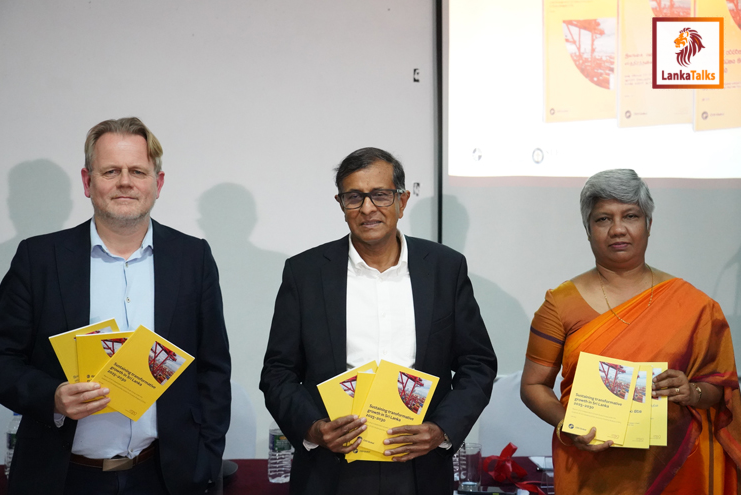
547The book titled “Sustaining Transformative Growth in Sri Lanka (2025–2030)”, jointly produced by ODI Global and the Centre for Poverty Analysis (CEPA), was officially launched on 8 January 2026 at the Sri Lanka Foundation in Colombo, under the patronage and participation of the book’s eight authors.
Sri Lanka stands at a critical crossroads. Having emerged from its worst economic crisis since independence, the country now faces the dual challenge of sustaining hard-won macroeconomic stability while igniting transformative growth. This report provides a timely and evidence-based roadmap for navigating this complex transition. While recent stabilisation efforts have delivered encouraging outcomes—including renewed economic growth and a sharp reduction in inflation, poverty levels remain alarmingly high, underscoring the limits of stabilisation without deeper reform.
The study argues that continued structural reforms are essential to prevent future crises and unlock Sri Lanka’s long-term development potential. It identifies six interlinked policy priorities: maintaining macroeconomic stability; integrating more effectively into global supply chains; improving factor markets such as labour, land and capital; implementing targeted sectoral policies; accelerating poverty reduction; and building political and social consensus for reform. Through coordinated action across these areas, Sri Lanka can capitalise on opportunities in tourism, the digital economy, niche manufacturing, and agriculture to achieve sustainable and inclusive growth between 2025 and 2030.
The book is authored by a group of leading economists and policy practitioners: Dr. Sirimal Abeyratne, Dr. Chandranath Amarasekara , Raveen Basnayake , Dr. Indrajit Coomaraswamy, Yvette Fernando , Dr. Dirk Willem T. Velde, Asela Wijesinghe, and Shiya Wickramasinghe and Dr. Ganeshan Wignaraja.
Commenting at the launch, Dr. Sirimal Abeyratne, Executive Director of CEPA, stated “Sri Lanka’s challenge is not simply to return to growth, but to secure growth that is transformative in nature—one that reshapes the structure of the economy, creates productive employment, and delivers tangible improvements in living standards. This book outlines a realistic and coherent policy direction for the critical 2025–2030 period.”
The report emphasises that the coming years represent a narrow but decisive window of opportunity for Sri Lanka. Locking in reforms, strengthening institutions, and fostering collaboration between the state, private sector, and civil society will be crucial to placing the economy on a more resilient, equitable, and future-ready growth path.
Photo caption- From left: Dr. Dirk Willem T. Velde, Dr. Ganeshan Wignaraja, and Ms. Yvette Fernando presenting the edited version of Sustaining Transformative Growth in Sri Lanka (2025–2030).
Source: Adaderana