

 Breaking News
 A.R.B.J Rajapaksha
 A.R.B.J Rajapaksha
 Jan 13 2026
 474
474- Wants to see SL-US trade deficit bridged and a level playing field for investors
- Says US-SL thwarted terror attack with sound coordination and trust
- Opines bilateral relationship is on a good trajectory
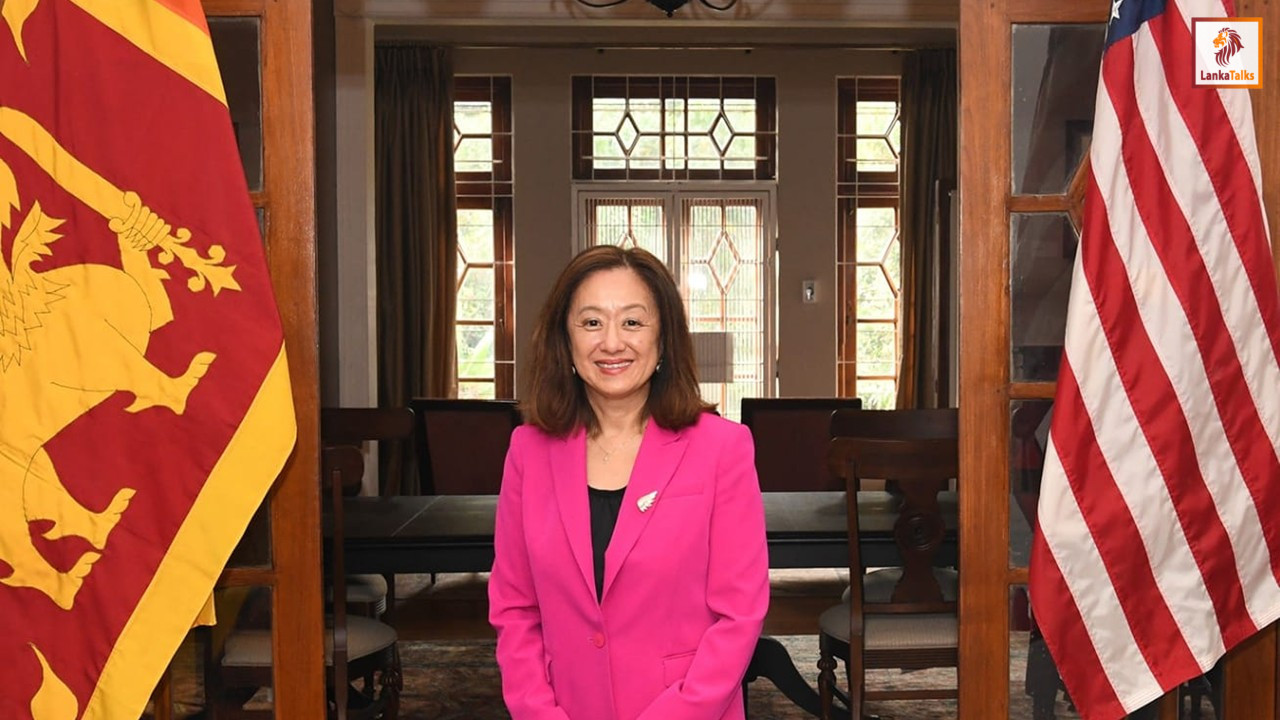
US Ambassador to Sri Lanka Julie Chung will depart Sri Lanka this week after a four-year tenure in Colombo.
Having been the top US diplomat on the island during some of its most turbulent times, Chung, one of the most visible and active US diplomats stationed in Colombo in recent times, sat down with The Sunday Morning for an interview to discuss bilateral relations between the two nations.
Following are excerpts:
What was your first impression of Sri Lanka when you arrived in Colombo and the partnership between the two countries?
It was almost four years ago when I arrived in Sri Lanka in February 2022. I had been to Sri Lanka as a tourist 10 years before that. I was eager to rediscover the country, which I had only known for 10 days before on my previous trip as a tourist.
My first impression was of the true beauty of the island, the tropical nature of the surroundings. The people were so warm and generous. It was a positive, warm welcome when I first arrived, especially as I left behind the cold tundra of Washington DC’s winter, and arrived in this warm place – physically and literally – but also within people’s hearts.
I was eager to strengthen the relationship between our two countries. And then of course, immediately after that, Sri Lanka entered that phase where the economic crisis and political disturbance occurred. We had to quickly adjust and the things we had planned to do or launch were put on hold because we had to deal with the crisis at hand.
People ask me about our accomplishments and I think about the challenging periods we have faced. That’s when you show the strength of a true friend. During the economic crisis, the United States stepped forward and helped with millions of dollars in assistance, for Small and Medium-sized Enterprises (SMEs) or with fertiliser for farmers, when there was no TSP fertiliser in the country whatsoever. We are proud of that moment. Recently, due to the cyclone, we got $ 2 million through the World Food Programme (WFP) and got a US C-130 aircraft to Sri Lanka to help deliver all the supplies around the country – it was no small feat to get our military assets to come in to help. So, during these tough times, we have stepped up and helped Sri Lanka.
The last area where I feel like we really did show the strength of our partnership was in thwarting a terrorist attack. You know, recently we saw the terrible tragedy on Bondi Beach, Australia, and I think back to when we first learnt information regarding a potential attack in Arugam Bay last October, and when we found out that information, we didn’t keep that to ourselves.
We have a moral responsibility to share that with the American citizens, with the public, and with the Sri Lankan Government, and this Government was just one month in. We didn’t really know each other, but they took that information and genuinely, pragmatically worked together with us, beefing up security. We worked very much hand-in-hand to the result that, because of our actions and our alert, the terrorist activity was thwarted.
That to me is something that not a lot of people talk about today, but it could have been a huge disaster and could have affected Sri Lanka, its tourism, and innocent civilians. That’s the kind of example where, when we work together as true partners, understanding each other, and trusting each other, we have a good impact and we can prevent incidents like this from happening.
The period you arrived in Sri Lanka was a very tense time because of the economic crisis and political upheaval. How were you received by the Sri Lankan State?
It wasn’t tense at all, actually. When I arrived in February, this was right before the economic crisis and the fuel crisis. I had a very positive welcome from the Gotabaya Rajapaksa administration, from Opposition leaders, and from people from all walks of life.
I thought it was very, very welcoming and productive, and despite the fact that I didn’t have that much interaction with President Gotabaya because of his shortened term, during the time we did interact, it was very pragmatic and productive.
I felt that the Government did engage with us in very positive ways. In fact, there were three Presidents during my time in Sri Lanka, so whether it was Gotabaya or Ranil, or now AKD, the three Presidents were very different individuals from three very different parties. I’m proud that we were able to forge strong, productive, and constructive relationships with each one of them.
For a diplomat, it may be an unusual situation to be in a station while there are three Presidents in office in the host country. Have you faced a situation like that before?
No. There were three changes of administrations, probably for the first time, but this is the point we always make about the United States. The United States does not support or advocate for a single individual or a party. We support democracy. We support prosperity, security, and the people. Whoever is in government, we really work hard to forge those partnerships and relationships and find ways that we have mutual interest.
In terms of the economic relationship with the US, how has the situation evolved since you came? Are we on a better trajectory engaging with the US since it is our main export market? What challenges persist?
I think the situation has really improved. There’s a lot of potential for growth in our bilateral economic relationship. As you rightly said, we are Sri Lanka’s largest export market, but we want to promote investment and trade in both directions. During my time here, we have seen, for instance, exports of US soybeans to Sri Lanka increase by 30%. We want to reduce that trade deficit. As US President Donald Trump has emphasised, having a fair and balanced trade relationship is important.
There’s much more potential in areas in the future of digital services and technology; the right foundations are there. Sri Lanka has great human resources. There is a good potential of resources and talent here in Sri Lanka. I think the challenges still remain in terms of regulatory issues and some protectionist measures and non-tariff barriers that not only benefit exports that we’re trying to have from the United States, but from trade with all countries.
Many foreign embassies in Colombo, many entities, and many international companies say the same thing. This is not just a message from the US. We want to come into Sri Lanka. We want to do more trade and investment with Sri Lanka. But the red tape, the barriers, those have to be addressed systematically so that there are structural changes. And I think that’s at the core of our relationship with Sri Lanka.
For Sri Lanka to attract more diverse investors from the US and elsewhere, the measures that it needs to make, that it has started to make, can be expanded even further, I believe, in the coming years. Sri Lanka has the potential to attract that regional and broader global investment.
As I mentioned, the trade deficit is a big issue and is a big concern for us. We need to address that by finding ways to export more US products. We import a lot of apparel and tea from Sri Lanka to the US. We would love to see Sri Lanka buy more equipment, aircraft, oil and gas, and from other areas where the US has very strong quality products.
It is important to be able to have that level playing field, so that the US gets a fair chance at contracts and procurement laws are clear. We see that the corruption issue is being addressed. These are steps I’ve seen being taken in the last year, so I think we’re on a very good trajectory.
In terms of the services sector, what do you see as prospective growth opportunities?
Recently, I went to the 10th anniversary of Uber here in Sri Lanka, and it’s a US company. People think of Uber as transport primarily, but it actually is one of the pioneers of digital services; the fact that all this is done on an app and it’s all digitalised.
I think that’s one of the pioneers of examples of how in the digital space, there’s so much potential in Sri Lanka. I’ve been to a number of events at Hatch, for example, that support startup companies and we’ve had a number of events at the American Corner, promoting STEM education and young people’s interest in digitalisation. So the talent is here and I’ve seen it, I’ve seen the results of it.
I’ve seen it demonstrate its marketability, so we need to just nurture that more – whether that’s through more regional cooperation, more global exchanges, doing more International Visitor Leadership Programs where we’ve successfully sent people to the US to learn about the most innovative products, technology, and processes in Silicon Valley and elsewhere.
We want to do more things like that to really develop digital services, cybersecurity, and cyberspace. We had the Special Envoy for Technology and Cybersecurity come visit Sri Lanka. I remember when, during his visit, he said to me that this was one of the countries where he saw huge potential.
As a diplomat, how did you approach the situation during the 2022 crisis period as the situation on the ground in Sri Lanka deteriorated and it desperately needed help and a bailout plan?
People forget what kind of a state the country was in. I still remember how I couldn’t go to the office because there was no fuel. I had to work from home. How dire that situation was and how quickly some people have forgotten. But it’s still vivid in my mind, the difficulty of that period. The country simply ran out of money. We were looking at ships right outside the port, trying to bring in oil and other items that couldn’t come in because they were not getting paid.
There was no more visible frustration than seeing that happen. So when the crisis happened, I think for many years we knew about the macroeconomic issues and the debt issues and debt distress, but it did feel like it came on very quickly and very fiercely. At the time, there was no clear understanding of what the IMF could do.
Our message was not to tell the Sri Lankan Government to do an IMF restructuring, but to explain the mechanics of what the IMF could provide. We believed, and many of the other embassies also conveyed this, that the IMF has the best tools, resources, and capabilities in place to help a country like Sri Lanka when there was really very little other option. It was up to the Sri Lankan Government to then decide what it was going to utilise and how it was going to do it.
Ultimately, it did work out. I know some people were sceptical of whether that should have taken place or not, but people also forget there was really no other option. There was no money at the time.
You came under scrutiny during the protests of 2022 for what was perceived as your support for the public protest movement, which didn’t sit quite well with the polity at the time. How did you navigate that?
First of all, I never met with protesters. There was a lot of misinformation and falsehoods around that period. We know of several individuals who peddled that misinformation and conspiracy theories and wrote books about it. But the truth is, when all this happened, it was the people’s voice. It was the Sri Lankan people.
What we did raise was the need for peaceful protest. We don’t condone any kind of violence. We urge restraint by all sides. But peaceful protest should be allowed. We had a peaceful protest this week in front of our embassy. We welcome that, as long as it’s peaceful. When they came, they put up some placards, delivered a petition, and then they left. That is a strong sign of a strong democracy. The way we voiced it, mostly through social media and Twitter, we weren’t the only ones; a number of other embassies echoed the exact same message.
The US policy on the Indo-Pacific hasn’t changed. That’s an enduring policy. How would you reflect on that in relation to your time in Colombo?
I’m very proud of what we did to strengthen the free and open Indo-Pacific during my tenure. In fact, I looked back at my very first public speech. It was 3 April 2022, I think, at the Cinnamon Grand hotel. There was a KDU event and the speech was called ‘A Shared Vision for a Free and Open Indo-Pacific.’ That was my very first public speech upon arriving in Sri Lanka and it is significant that it was my first speech.
In my speech, I said that Sri Lanka has so much at stake. There is so much of its maritime space – two-thirds of the world’s crude oil passes through your waters, so many of the Navy ships – that it can and should step up in its responsibilities and it can and should punch above its weight. Sri Lanka can punch about its weight in the maritime domain and in the Indian Ocean.
I remember having a sidebar discussion with some young researchers at that event and they said: “Oh, no, we’re just Sri Lanka, we’re a small country. We have bigger countries around us.” I said: “Never underestimate yourself. Sri Lanka has the ability, has a responsibility, has a capability to really assert its maritime domain awareness, to know what’s going on in its waters.”
Since that event in 2022 to now, if you look at what happened, Sri Lanka stepped up ‘Operation Prosperity Guardian’ to send the gifted Coast Guard Cutter to participate in defending waters against the global Houthi terrorists. That’s a big step for Sri Lanka. Last year, Sri Lanka took the lead in the Combined Maritime Task Force in Bahrain for the first time ever.
These are significant steps that Sri Lanka has taken to show its leadership, that it doesn’t have to just follow other countries in the Indo-Pacific, that it’s not the size of a country, it’s the willpower. It’s the political will, and this belief that Sri Lanka can contribute to the freedom, peace, and security of the region.
Beyond that, we have done a lot to support the security maritime relationship, with the fourth donated Coast Guard Cutter on its way here and the Beachcraft King Air aircraft handover. The recent Pacific Angel was our largest-ever co-host of multilateral exercises. We had a number of countries involved in that. All these show that Sri Lanka can assert its sovereignty, but also utilise its resources and tools on hand to protect its waters and be a responsible, leading player in the Indo-Pacific.
Do you think that Sri Lanka needs to take our maritime domain seriously and assert our sovereignty in it?
It has been taken seriously and I hope Sri Lanka continues to take it seriously. Sri Lanka should know what is going on in its waters – in its areas and in the surrounding areas. When you have dual-use research vessels coming but you don’t know what their intent is and how they are using the information, Sri Lanka has the right to ask and demand that they have the information for that.
It’s a matter of respect of Sri Lanka’s sovereignty, and that is why when we and other countries said we could help with Sri Lanka’s own hydrographic capabilities, that is a gesture saying, ‘We are not going to come do things for you, but we want to help Sri Lanka develop that capability so you have that in your own control, and you don’t have to depend on any country, that you have your own sovereign control and rights over what’s happening in your waters.’ That’s a very important aspect of what maritime domain awareness is.
We have a rather new political entity in power for the first time. How does the US view this Government’s first year in office? In terms of bilateral relations, have you been engaging the Government very frequently? How is that relationship?
As I said, one month in, when we found information about a potential terrorist attack, it really brought to light the importance of engaging with the new Government. And since that point on, it has been a very productive and constructive relationship across the front. We have had good discussions, including on tariffs, and have had constructive discussions on what we can do to reduce the trade deficit and reduce non-tariff barriers.
At every step of the way, I found the leadership really willing and open to work with the US, and there has been mutual respect and trust. Therefore, I believe that that will continue long after my tenure with the arrival of the new ambassador, and whether it’s on security matters, economic expansion, or people-to-people ties, there is a strong will and great openness to the bilateral friendship.
Source - The Morning