

 Breaking News
 A.R.B.J Rajapaksha
 A.R.B.J Rajapaksha
 Jan 30 2026
 490
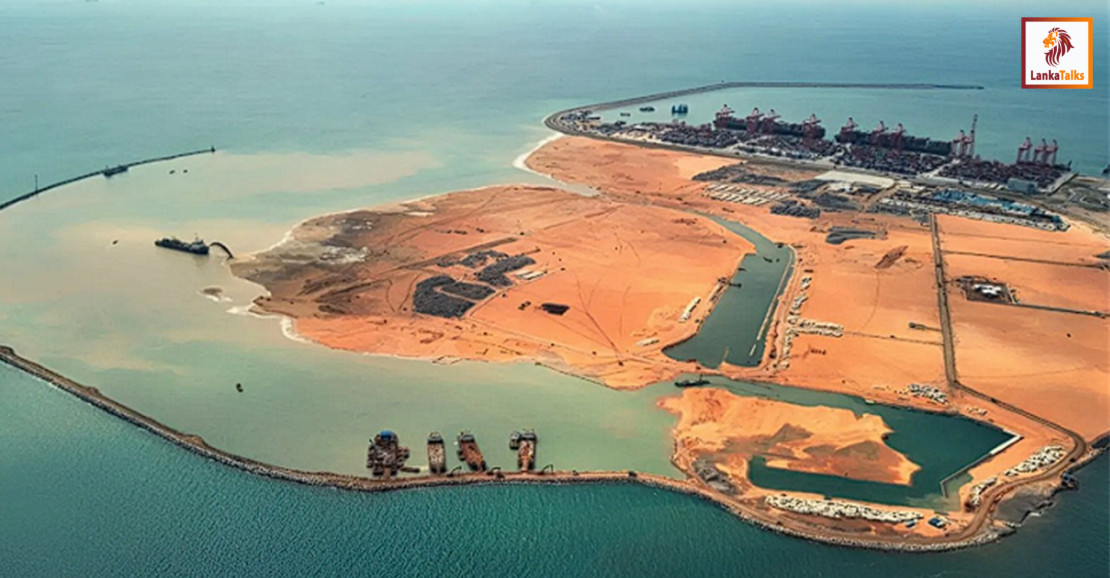
490Sri Lankan Special Economic Zone (SEZ) Port City Colombo is seeing a majority of its investments directed from the Middle East and Europe, with 140 applications already approved, and another 200 awaiting approval as of yet.
This was stated by Sri Lankan Presidential Special Envoy for Foreign Investment Hanif Yusuf, who was speaking to Singapore-based multinational news channel Channel News Asia (CNA) recently.
“The bulk of investments, in my view, the way we are going, would be from the Middle East and from Europe. We’ve got about 140 applications already approved, and we’ve got 200 more on the pending list [waiting] for approval,” Yusuf said, addressing the concerns over the project’s viability beyond its purported purpose of being a strategic investment of China, from within the South Asian region.
“If you look at the mix of the investors there from all over. The Chinese [have], it was about 13% when I last saw it. There are people from the Middle East, there are people from the Far East, there are people from Europe, its gathering momentum is not restricted to one country.”
The China Harbour Engineering Company (CHEC) Port City Colombo recently said it is to invest another $ 300 million, in addition to its $ 1.25 billion initial investment it had made for the infrastructure process of reclaiming land from the sea, and building infrastructure such as utilities and bridges.
“The Chinese did the infrastructure of the whole Port City, the land in Port City belongs to the Sri Lankan Government. The rules and regulations are made by the Sri Lankan Government. There is this Colombo Port Economic Commission (CPEC) which is done by the Government, which approves every project that gets out of Port City. So it would have been Chinese built, for the infrastructure, but it is definitely going to be Sri Lankan run, owned, and the laws will be Sri Lankan laws.”
According to Deputy Minister of Industries Chathuranga Abeysinghe earlier this month, the Colombo Port City Economic Commission (CPEC) had by then approved investments worth $ 1.2 billion, with construction for the projects intended to begin this year. Further, another $ 732 million worth of investments were awaiting approval, at the time of the comments made in parliament on 7 January.
The comments were made in conjunction to the Sri Lankan Parliament passing amendments to the Port City’s law: The Port City Act. The new amendments included the reduction of tax holidays from 25-year tax holidays that had initially been proposed to attract investments, to 15-year tax holidays, based on the level of investment.
“The IMF has brought fiscal discipline to our country, and we are a people that has come out of the crisis so fast, from anywhere in the world, we have followed the IMF policies and this policy of scaling back is a good thing. We want serious investors, people who want to see predictability, and stability more than tax incentives,” Yusuf told CNA.
When asked to contrast Sri Lanka’s past billion dollar infrastructure projects, particularly the Hambantota International Port (HIP) against that of the CPC, Yusuf said that the HIP was a Government debt project, noting that it had not been “commercially viable”.
“Hambantota was a sovereign backed, Government debt project, and the Port City is not. The Port City is a 100% public-private investment. That was backed by sovereign debt, this is not. Lessons learned from Hambantota would be: any projects that you do must be commercially viable.”
Source - The Morning