


 Breaking News

 Sheron
 Sheron
 Mar 13 2026
 376
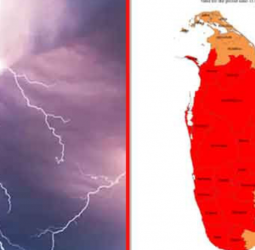
376Nearly four months after the destructive landfall of Cyclone Ditwah, questions are emerging about whether Sri Lanka’s manufacturing sector is receiving adequate support to recover from the disaster’s economic shock.
The cyclone, which struck the country in late November 2025, caused widespread flooding across industrial zones and inflicted estimated losses of Rs. 33.96 billion on the manufacturing sector, according to preliminary assessments by the Industry and Entrepreneurship Development Ministry.
The most severe losses stemmed from destroyed raw materials and inventory valued at approximately Rs. 10.2 billion. But the damage extended far beyond stock losses. Floodwaters entered factories, disabling machinery, halting production lines and disrupting supply chains that many companies depend on to maintain operations.
Several manufacturers say the flooding left critical equipment unusable for extended periods, forcing them to temporarily shut down operations and incur heavy revenue losses.
While the damage represents less than two percent of the sector’s economic contribution, the disruption has still raised concerns within an industry that contributes significantly to the national economy.
Data from the Department of Census and Statistics shows industrial activities accounted for 27.7% of the country’s Gross Domestic Product in the third quarter of 2025, amounting to more than Rs. 2.3 billion at current prices.
Despite the sector’s importance, critics argue that recovery efforts so far appear limited in scope.
In December 2025, the Government introduced the Industry Revival Facilitation Program (IRFP) through a partnership between the Industry and Entrepreneurship Development Ministry and the Industrial Development Board.
The initiative was designed as a public–private partnership to support industries affected by the cyclone. However, the program’s first phase has only assisted 43 industries, raising questions about whether the support reaches the wider manufacturing base affected by the disaster.
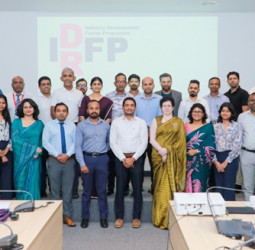
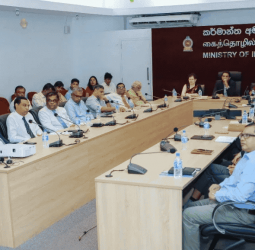
The first phase of the initiative concluded this week at a ceremony attended by Deputy Minister Chathuranga Abeysinghe.
During the event, the ministry acknowledged private sector partners who contributed to recovery efforts. Officials also recognised individuals who helped establish the Industry Disaster Support Centre (IDSC), which created a digital system to collect and analyse data on the impact of the cyclone on industries.
The platform enabled authorities to build a centralised database of affected companies and damage assessments, a step officials say will improve disaster response planning in the future.
However for many businesses, the key issue remains financial recovery. With machinery damaged and supply chains disrupted, some companies face the costly challenge of restoring operations without significant state assistance.
The ministry has announced plans to introduce the Industry Development Foster Program (IDFP), which aims to provide longer-term support for industries identified in post-disaster assessments.
Nevertheless, industry observers say the effectiveness of that program will determine whether the manufacturing sector can fully rebound from the cyclone’s impact.
For now, the sector continues to navigate a fragile recovery—balancing limited relief support against the urgent need to rebuild production capacity and restore supply chains disrupted by one of the most damaging weather events to hit Sri Lanka’s industrial landscape in recent years.
source: LNW