

 Breaking News
 Afrin
Afrin Afrin
Afrin Jan 05 2026
 520
520Although we are self-sufficient in rice for the most part, it is critical to ensure that rice is accessible and affordable
 Sri Lanka is moving from crisis to crisis. Our country begins 2026 amidst a precarious recovery from the long economic crisis, aggravated more recently by the devastating cyclone. The dawn of the second quarter of the twenty-first century reflects not just a broken international financial system, with close to half the countries in the developing world in debt trouble, but also rising geo-political conflagration with the United States invading Venezuela and kidnapping its President.
Global political economy today is starkly reminiscent of the unravelling global order in the 1930s with the Great Depression, leading to the rise of fascism and World War II. In this context, what economic trajectory should Sri Lanka pursue? I argue that in these times of global turmoil and national crisis, we should be focusing on national food and financial self-sufficiency.
In this column, I draw on my keynote address titled, ‘Crisis and Self-Sufficiency’ at the 56th Meeting of the Sri Lanka Forum of University Economists held at the University of Jaffna. In my future columns, I hope to address the questions raised by economists from different universities.
Indeed, these are times for many such discussions and debates as we consider the way forward, and the universities have an important role in providing the space for intellectual engagement on our economic future.
Crisis and the current constraints
In the late 1970s Sri Lanka initiated its open economy reforms with increasing trade and capital flows under the IMF-backed Structural Adjustment Programmes. This shift disrupted local production, leading to heavy import dependence including in agriculture, while increasing external debt. The cycles of IMF agreements have further entrenched this dependency.
With the end of the civil war in 2009 coinciding with the Global Financial Crisis of 2008-2009, Sri Lanka – then dubbed as an emerging market and post-conflict country – went to the international capital markets resulting in tremendous inflows of finance capital. The 15th IMF agreement in July 2009 gave Sri Lanka the green light for such commercial borrowing that eventually led to the debt problems and default on external debt in 2022.
I have written about this economic trajectory in the 2010s as the second wave of neoliberalism in Sri Lanka. But today, neoliberalism itself is in crisis, as evident from the policies of the Trump regime with its trade tariffs and naked grab of assets undoing the very free trade regime promoted by the United States over the past many decades.
Sri Lanka’s economic problems and debt crisis are not unique. Many developing countries, including Ghana and Zambia, similarly began borrowing from the bond markets in the late 2000s, and defaulted on their debt around the same time as our country. In this context, for Sri Lanka to address the long economic downturn now further aggravated by the destruction caused by Cyclone Ditwah, the government must increase its investment. However, it remains handcuffed by the current IMF agreement and the laws rushed through by the illegitimate Wickramasinghe-Rajapakse government, particularly the Public Finance Management Act and the Central Bank Act. At this crucial juncture, both these laws should be repealed, in order for the government to lead the recovery through spending to stimulate the economy.
Keynes on national self-sufficiency
John Maynard Keynes in an article titled National Self-Sufficiency in The Yale Review in 1933, put forward a powerful argument for a shift in thinking amidst the Great Depression. Indeed, Sri Lanka’s present conjuncture closely mirrors that period of tremendous economic disruption and decline.
Keynes, who is known to have argued for counter-cyclical measures by governments amidst the economic depression, wrote:
“I sympathise, therefore, with those who would minimise, rather than with those who would maximise, economic entanglement between nations. Ideas, knowledge, art, hospitality, travel -- these are the things which should of their nature be international. But let goods be homespun whenever it is reasonably and conveniently possible; and, above all, let finance be primarily national.”
Keynes here calls for finance to be ‘primarily national,’ which should all the more be the imperative for countries like ours that are repeatedly undermined by the extractive international financial system. The high interest rates of such external debt are bound end in debt crisis. Debt is unsustainable when interest rates of external borrowing are much higher than the GDP growth rate. He further states:
“A considerable degree of international specialisation is necessary in a rational world in all cases where it is dictated by wide differences of climate, natural resources, native aptitudes, level of culture and density of population. But over an increasingly wide range of industrial products, and perhaps of agricultural products also, I become doubtful whether the economic cost of national self-sufficiency is great enough to outweigh the other advantages of gradually bringing the producer and the consumer within the ambit of the same national, economic and financial organisation.”
It is as if Keynes, almost a century ago, had foreseen the dangers of neoliberal globalisation. In my view national self-sufficiency is not a choice, but a necessity for our survival.
Food and finance
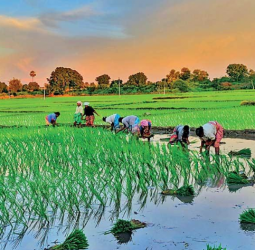
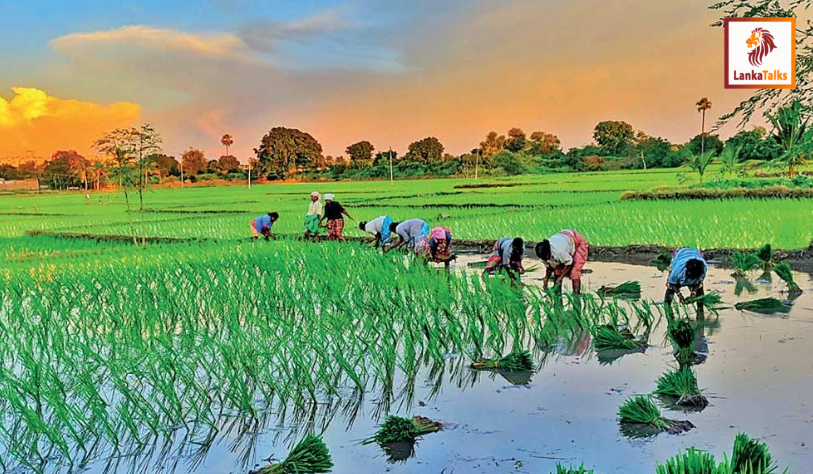
The most worrying consequence of the economic depression in Sri Lanka is food insecurity. Nutritious food has become unaffordable and there is now a distinct rise in malnutrition. Over the past year, the government has emphasised the importance of agricultural production and a public distribution system, including with co-operative-led growth. However, the government needs to go much further, and push for self-sufficiency in food where possible. Although we are self-sufficient in rice for the most part, it is critical to ensure that rice is accessible and affordable. Furthermore, there is also the need for self-sufficiency in other crops such as pulses rich in nutrition. Such diversification will also help us confront climate shocks as with the cyclone.
Until a few decades ago, Sri Lanka had a universal food subsidy programme that made it a right for any citizen to claim access to rice. We had a robust public distribution system, which the previous government tried to liquidate and the current government is reviving. Institutions such as the Paddy Marketing Board and Co-operative Wholesale Establishment need to be strengthened. The government’s recognition of the co-operative movement as the third pillar of the economy is an important shift. Plans to establish 1,000 producer co-operatives nationwide and 500 in the Hill Country hold significant promise for the rural population.
In this context, food self-sufficiency alone is insufficient to address the crisis. To ensure employment and growth, we need national financial self-sufficiency. But that requires new mechanisms and institutions. The Government needs to implement a wealth tax to reduce the burden of working people and for a better distribution of resources. A new public development bank is essential for long-term and counter-cyclical investment to stimulate economic growth. Industrial and trade policies are a priority to both address and withstand global shocks and to build national self-sufficiency in the production of various essential goods supported by national finances.
The crisis prone neoliberal economic trajectory has for decades failed our working people. With the unravelling global order, we have no choice but to break with the paradigm that the market will fix our economy. Self-sufficiency is the most important policy for us to consider in the years ahead. Coming out of this crisis, Sri Lanka should entrench self-sufficiency as a policy priority for decades to come, similar to how free healthcare and education have stood the test of time.
Source : DailyMirror