

 Breaking News
 A.R.B.J Rajapaksha
 A.R.B.J Rajapaksha
 Jan 07 2026
 1652
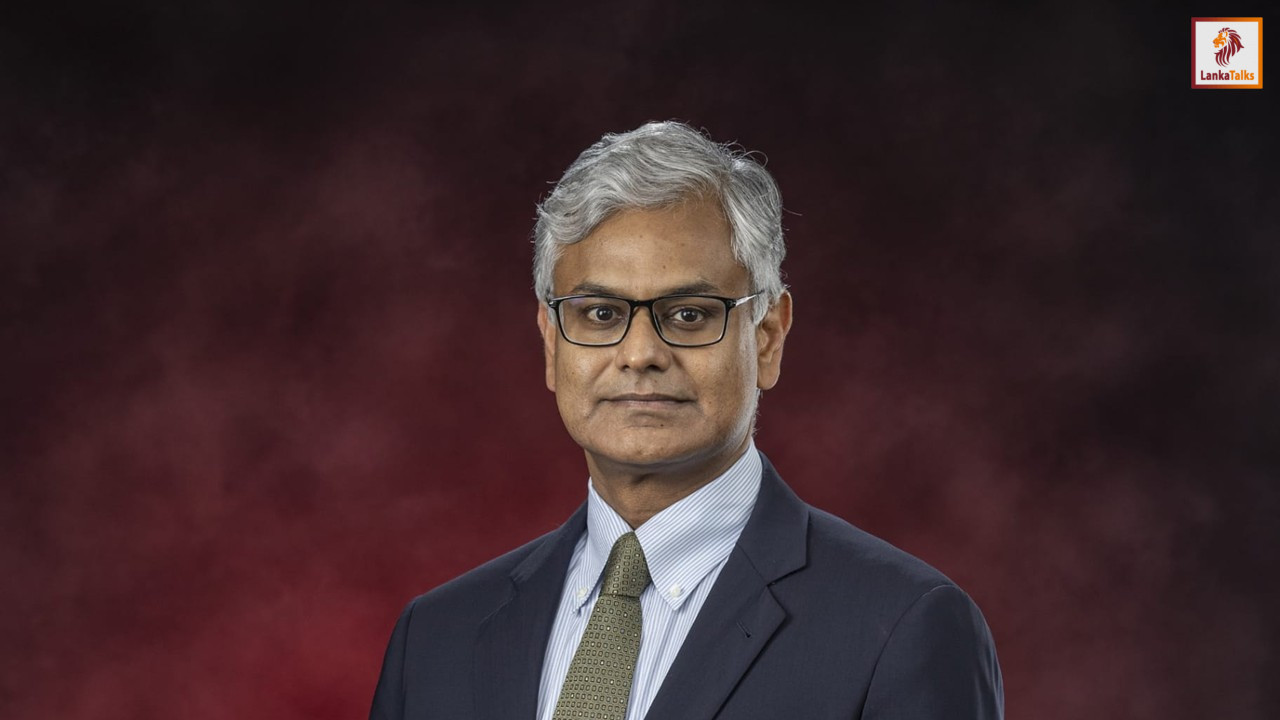
1652- CCC Chair Krishan Balendra on the consistent growth that SL has experienced
With the end to last year (2025) just a few days ago, it may be safe to say that Sri Lanka’s economy is back on its feet. After five per cent growth in 2024, expansion continued in 2025, with inflation under control, and stability returning. But, with one in four Sri Lankans still facing poverty and natural disasters not sparing us, recovery is not yet shared by all.
As we step into this year (2026), can business turn stability into momentum? Who better to ask than the Ceylon Chamber of Commerce (CCC) Chairperson Krishan Balendra, who was on Kaleidoscope this week.
Following are excerpts of the interview:
As Sri Lanka enters 2026, what would you identify as the single most critical economic inflexion point facing the country right now?
The country – our economy – has recovered well after the worst economic crisis in our history in 2022. We have seen a great deal of resilience and stability, with two years of decent gross domestic product (GDP) growth of around 5% in 2024 and an expected close to 5% in 2025. If I were to point to what could be most impactful right now, it would be the effects of Cyclone Ditwah.
We set ourselves on a very good path after the crisis and achieved the stability that we now have. It is important that we continue that discipline, remain on that path, and do everything that needs to be done to recover from the cyclone. I think that right now, we need to watch, over the next few weeks and months, how well we are able to manage the effects of the cyclone.
So, business confidence is showing signs of recovery and is on the uptake. How fragile is this optimism, and what do you think could derail it at some point?
I think that it’s quite solid. We took the right steps after the crisis. In a sense, it took a crisis to force us to do the right thing, and the economy has recovered well — faster than most people expected, and better than many other countries that have gone through similar crises. The business optimism that we are seeing is quite solid and justified. I wouldn’t call it fragile.
What could derail it however is if we don’t stick to the path, don’t maintain the discipline, and don’t continue with some of the reforms that we are committed to. There are also external risks, such as the US tariffs, where there is still some uncertainty. But overall, I am confident the economy will remain on a positive path and that business optimism is justified.
From the Chamber’s perspective, what should be done structurally, or what should change structurally, if Sri Lanka’s economic growth is to be sustained rather than be cyclical?
Sustaining this growth is critical. We have had decades of ups and downs — booms and busts — and this time around, it could be different. One critical factor is inflation and interest rates. If you look at the last several decades, we have gone through cycles of high inflation and high interest rates, followed by dropping inflation and low interest rates, and then a repeat of that cycle. This time, there is a real chance that inflation targeting could work.
The Central Bank of Sri Lanka (CBSL) is now, by law, independent. With that, we could see — for the first time — stable interest rates. That predictability can make a significant difference for businesses. It is almost something that we are not used to in Sri Lanka as businesses operating here, because we have always had these cycles. So, if we can achieve predictable inflation, steady inflation, and relatively flat interest rates, that can make a very material difference.
What are global investors saying about Sri Lanka going forward into 2026? Are we a turnaround story, or are we still seen as a high-risk market?
It is still early days. It has only been about three years since our worst economic crisis, and we have come out of a default credit rating. Looking at the investors and partners that we speak with, we are seeing early signs of interest returning to Sri Lanka. I wouldn’t say that we have fully turned the corner, but, there is certainly reason to be optimistic. If we continue to see improvements in the macroeconomic environment, it is likely that we will see more foreign investment interest going forward.
Sri Lanka has long talked about becoming a regional hub. From that perspective, what is realistically achievable in the next three to five years?
What is very realistic is leveraging the fact that we are next door to India. We are one hour away from South India, two hours away from Mumbai, and already well integrated into regional shipping links.
The Port of Colombo is the largest Port in South Asia and effectively functions as a Port for India. 85% of the volume at the Port is transhipment, and most of it are containers moving in and out of India. With the kind of growth that we are seeing in India, container volumes are increasing substantially every year. Becoming a regional hub for ports and logistics is therefore very realistic.
Becoming a regional hub for meetings, incentives, conventions, and exhibitions (MICE) based events is also achievable. With the opening of new hotels in Colombo, we now have the capacity to host large regional events. We are seeing increased interest in Colombo as a destination for conferences and MICE events, especially from India.
On the manufacturing side, there is also opportunity, but, more work needs to be done. We often talk about becoming an export-driven economy, but, I haven’t seen enough policy work identifying the industries where we have a real comparative advantage. Given our proximity to India and our similar culture, there is an opportunity to integrate into the Indian manufacturing supply chain. But again, more focused work needs to be done in this area.
Simply being next door to the fastest-growing large economy in the world is, in itself, a very realistic opportunity for Sri Lanka.
Cost of living remains a pressure and a concern. How do businesses balance competitiveness with social responsibility, especially given what we have been through recently?
It is very important that we get that balance right. Corporates in Sri Lanka have placed a strong emphasis on social responsibility. After the recent events, we have seen many corporates stepping up — not just with donations, but with their teams volunteering in disaster-stricken areas.
At the CCC, almost all our members have stepped up in a big way, through monetary donations, relief contributions, and support within their local communities. We have also seen hundreds and thousands of private-sector staff volunteering their time.
It is also important that, with the shortages that we may see — whether in vegetables, fruits, or other essential items — the private sector acts responsibly and does not attempt to profit from those shortages. Overall, the recent events were another strong reflection of the Sri Lankan private sector’s willingness to step up when it is needed the most.
Sustainability has become a key global business driver. What role should Sri Lankan businesses play in meeting environmental and social responsibility targets by 2026?
Sri Lankan corporates have already done a significant amount of work on the environmental, social, and governance (ESG) framework, which is evident in the integrated reporting produced annually by listed companies. Most companies have set ESG targets, and in reality, we don’t have a choice anymore — this has to become a way of doing business.
Ditwah is another example of how the climate is changing. Even prior to this, we have seen shifts in weather patterns across Sri Lanka. It is therefore critical that corporates continue to focus on ESG and sustainable business practices. Sri Lanka has, for example, a major opportunity in solar energy. Rooftop solar installations have now become a material part of total power generation.
While corporates see cost-saving benefits, there has also been a conscious effort to adopt more sustainable practices. There will be greater emphasis on integrated and sustainability reporting, with new accounting standards coming into place. Like elsewhere in the world, the Sri Lankan private sector has a major role to play in driving a more ESG-focused future.
Talent migration and skill gaps are major concerns for Sri Lanka. Is the private sector building a future-ready workforce to support the economic growth that we are talking about?
We need to address the reasons why Sri Lankans have chosen to emigrate rather than remain in the country. Young people who grew up here, went to school and university here, and whose families are here, would naturally want to live in Sri Lanka. During the economic crisis, we saw a significant exodus from the private sector.
We need to address the factors that drive people away. Are we providing the best training, aligned with international standards? Are we showing clear career paths for growth? Are companies’ truly meritocratic and rewarding high performers? Is compensation competitive? There are multiple factors behind emigration, and we need to study and address as many of them as possible. Doing so will go a long way in retaining talent.
It is encouraging to see that as the economy has stabilised and shown resilience and growth, this exodus has slowed, and in fact, some people are beginning to look at returning.
Global trade is realigning, and geopolitics is reshaping supply chains. Where does Sri Lanka fit into this picture going forward?
The port opportunity is significant. We have the largest Port in South Asia, and it is already the region’s hub Port. It is a natural deep-water Port, with additional container-handling capacity added. Sri Lanka can play a major role in ports and logistics.
In manufacturing, while we have some strong sectors, if we want to become a truly export-driven economy, we need to identify other areas where we have a comparative advantage. Being next door to India, with its growing manufacturing base, presents opportunities to integrate into those supply chains. But again, more work is needed.
Post-Covid and now with US tariffs, many Indian companies are looking to de-risk and diversify. Sri Lanka is an attractive option due to proximity and cultural similarities. The key question is identifying the specific areas where we can be competitive in the global supply chain.
If you were to define success for Sri Lanka’s business sector by the end of 2026, what would that look like in concrete terms?
We have had two years of good growth, with the GDP expanding at around 5%. We need to maintain that momentum and, ideally, improve on it. From a private-sector perspective, we need to continue growing our businesses across all fronts, work closely with partners and investors, and actively seek new opportunities to generate foreign direct investment (FDI). It is only through increased FDI that we will be able to lift growth to a level that truly takes us beyond recovery and into long-term prosperity.
We have stabilised and recovered well, but, higher growth rates will be needed to reach our full potential. For that, the private sector must identify new investment opportunities and find the right international partners to bring in the FDI required to drive that next phase of growth.
The writer is the host, director, and co-producer of the weekly digital programme ‘Kaleidoscope with Savithri Rodrigo’ which can be viewed on YouTube, Facebook, Instagram and LinkedIn. She has over three decades of experience in print, electronic, and social media
--------
The views and opinions expressed in this column are those of the author, and do not necessarily reflect those of this publication
Source -The Morning