

 Breaking News
 Natasha
 Natasha
 Jan 04 2026
 550
550Sri Lanka’s ability to sustain poverty reduction is increasingly tied to the sustenance of the natural capital, which serves as the foundation for both rural livelihoods and national disaster resilience.
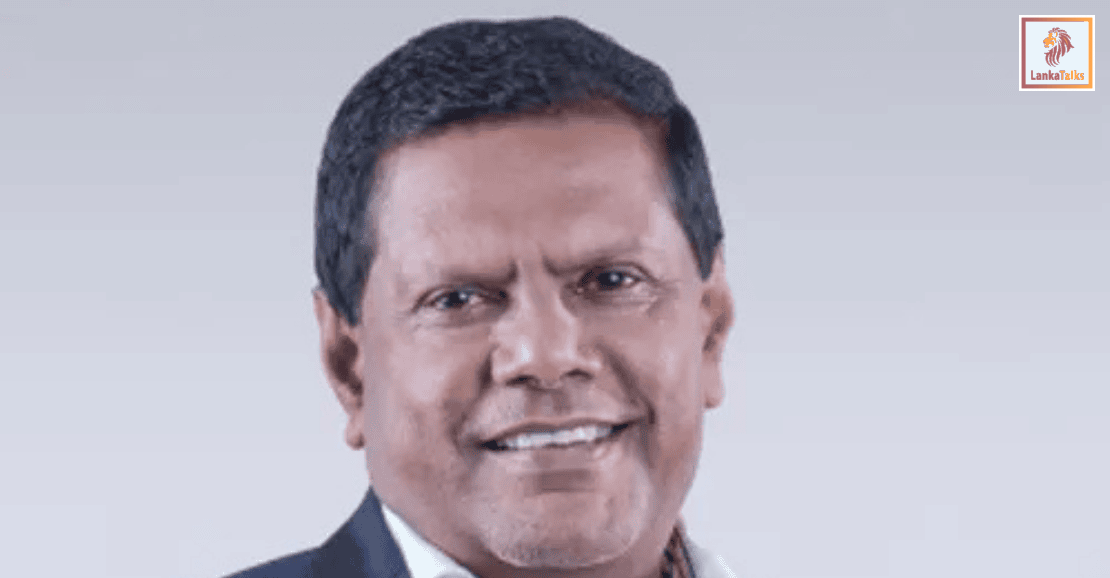
In an interview with The Sunday Morning Business, former Professor of the University of Peradeniya Department of Agricultural Economics, former Environment and Safeguards Division Director of the Asian Development Bank, and former Executive Director of the Centre for Poverty Analysis (CEPA) Dr. Herath Gunatilake highlighted the need to approach environmental management as a strategic economic investment.
He explained that the lack of optimal investments in land, one the four factors of production that encompasses natural capital and environmental services, was the fundamental reason behind the multifaceted crises faced by people today.
Dr. Gunatilake further noted that achieving long-term stability required a shift towards community-level disaster preparedness and an improved awareness at the grassroots level in addition to national level planning for climate adaptation.
Following are excerpts:
Based on early assessments, which income groups and regions are likely to experience the sharpest poverty reversals following Cyclone Ditwah, and through which economic channels?
The impact depends largely on the geography and the specific nature of the data we are seeing. When looking at which groups are most at risk, the general understanding globally is that the poor are significantly more vulnerable to these disasters.
This happens for several reasons. First, lower-income individuals have very limited choices regarding where they live. In many Asian countries, they occupy marginal or unsafe lands that are naturally prone to disasters. While a cyclone can damage any structure, higher-income groups generally have more resilience. They have savings and additional resources that allow them to rebuild and recover after a disaster.
For the poor, income sources are often unstable and tied to the informal economy. When a disaster strikes, it disrupts supply chains and general economic activity, causing those in the informal labour market to lose their jobs immediately. They face a double blow, where they not only lose their physical assets but also their earning opportunities at the same time. This can push people back into poverty very quickly.
Their asset base is also quite narrow, and these families lack the financial cushion to rebound. Thus, even those living just above the poverty line can be pulled back under it because they lack the underlying assets to support a quick recovery.
How do climate and environmental shocks interact with structural poverty – especially in agriculture and informal employment – from an economic standpoint, as well as in pushing vulnerable non-poor households back below the poverty line?
Sri Lanka managed to bring poverty down to about 4% of the population before the recent economic crisis. This remaining segment is what we call the structurally poor population.
This group often includes people with disabilities or health issues that prevent them from being fully productive in the labour market. They also face locational disadvantages, living in remote areas without proper roads, schools, or healthcare. These locations frequently overlap with areas most vulnerable to natural disasters.
This structural poverty is also tied to a very limited asset base, such as in the agricultural sector. Many of these individuals are smallholders who cultivate crops on sloped or upland areas. Because they are often working with just half an acre or a single acre of land, losing that crop means losing 50–70% of their total annual income. Their livelihoods depend on a very narrow natural resource base, which makes them far more susceptible to environmental shocks.
From an environmental economics perspective, how significant is the loss of natural capital in worsening post-disaster poverty outcomes?
Natural capital is the foundation of any economy; it provides inputs to all supply chains. In agriculture, we often focus on farmland, but we need to look at the broader perspective of ecosystems.
For example, the water retention capacity of an upper watershed is vital. If that system is degraded, the soil cannot absorb water, leading to downstream flooding. Similarly, coastal ecosystems like mangroves are essential for fisheries, as many species rely on them for breeding. When a disaster destroys these buffers, it directly impacts the livelihoods of those who depend on the sea.
Biodiversity is the insurance against natural shocks such as diseases and the source of materials for many economic developments. About 300 years ago, the rubber plant was a weed abundantly found in disturbed ecosystems due to shifting cultivation. When the appropriate technology came into effect, it supported a multi-billion dollar industry.
Wetlands are another clear example. Wetland ecosystems absorb water and purify and release the water slowly, reducing flood intensity. Many flash floods in urban areas are due to filling wetlands for housing and commercial purposes. Muthurajawela is a good example. Soil quality works the same way; if mismanagement leads to acidic or poor-quality soil, crop yields decline, which directly reduces the income of farmers.
Living on the margins economically often goes hand-in-hand with living in a vulnerable environment. Over time, human mismanagement has created imbalances that intensify the impact of natural disasters and a degraded natural system leaves people with no buffers and no savings.
When their income-earning opportunities are destroyed, they cannot recover because the ecosystem that once supported them has been weakened or disappeared. Climate change exacerbates this existing degradation, making the population even more vulnerable.
How should policymakers frame environmental protection as an investment with measurable poverty-reduction returns?
In conventional economics, investment is usually defined as increasing physical capital. However, an optimal combination of both physical and natural capital is necessary to sustain any productive activity.
Historically, economics became biased towards physical capital because natural capital was so abundant relative to population size. As a result, land was rarely viewed as a priority for investment. Today, we must view both preservation and optimal use of natural capital as strategic investments. Failure to recognise this need will be disastrous to mankind.
There should be a differentiated approach to natural capital investment. Some ecosystems require total protection from human activity to allow species to evolve and maintain diversity. In others, we can allow limited productive activities for local communities, which causes minimal disturbance. Even in agriculture, we have focused so heavily on chemical fertilisers and pesticides that we have neglected natural pest control and organic systems. This has resulted in polluted water systems and shortages of clean water.
Proper management of natural capital, from strict protection to wise, sustainable use, is the type of investment we have been ignoring for too long. We must also invest in restoring what has been degraded through reforestation, watershed management, and the creation of artificial wetlands to regain ecological balance.
Beyond long-term investment, how should policy address immediate climate-related risks and community-level disaster preparedness?
Being a small country, Sri Lanka does not have the capacity to change the global course of climate change, which lies with major emitters. Our focus must be on adaptation and disaster preparedness.
While the Government must handle high-level tasks like early warning systems and budget provisions, there should be better preparedness at the community level to avoid many deaths and the destruction of assets that often trap the poor in a cycle of poverty.
For instance, during a disaster preparedness project I designed and implemented in Vietnam’s Hue Province, which is highly prone to cyclones, we focused on training and educating women to prepare disaster kits prior to the cyclone season. This kit included drinking water, some essential medicines, dry rations, and a few blankets. We also mapped out evacuation routes to specific high-ground locations.
A key part of that project was establishing youth disaster management groups that would evacuate livelihood assets like cattle and goats to a highland area. Protecting drinking water well before evacuation was another activity. These measures are inexpensive, but they change the mindset of the community and help reduce deaths and loss of livelihood assets, while significantly improving community resilience after a disaster.
In Sri Lanka, many people are reluctant to leave their homes even after a warning because they fear losing the few possessions they have accumulated. We need to address this sense of insecurity so people feel safe evacuating. If we strengthen local warning systems, rather than just relying on mainstream channels, we can ensure everyone is alerted. By investing in this kind of community-level preparedness, we reduce immediate damage and ensure a much faster recovery.
Looking ahead, what economic policy reforms are most critical to integrating environmental economics into mainstream development planning?
Measures such as implementing environmental taxes on polluting fuels can be adopted, as they account for health and environmental costs, but it is politically difficult. In many countries, such taxes face heavy public opposition. Therefore, the success of these economic instruments depends on public demand and awareness, which are currently lacking in most of the countries in the Asian region, including Sri Lanka.
Regulation alone is not always the most efficient path for better environmental management. A successful example is the recent regulation and pricing of polythene bags. This is a low-hanging fruit of environmental economics that works because there is a direct cost to the consumer, and the behavioural change is clear.
I learnt that the franchise supermarket near my home in Peradeniya saves about 5,000 polythene bags now because the shop charges a high price and people bring recyclable bags when they come shopping.
We should also look at nature-based solutions as economic alternatives to engineering solutions. For instance, creating artificial wetlands to manage floods is far cheaper than building massive concrete flood protection structures. These wetlands provide secondary benefits, such as attracting birds and supporting tourism, which add further value to the economy.
However, moving towards these more efficient models requires a shift in the grassroots mindset. Thus, increasing awareness of the economic benefits of nature is the most important step for future planning.
Valuation of natural capital and moving away from national income such as Gross Domestic Product (GDP) in measuring the economic performance of a country, and towards a national wealth framework that accounts for the degradation of natural capital, should be the policy shift and way forward for Sri Lanka.
Source: The morning