


 Breaking News
 Tracy
Tracy Tracy
Tracy Oct 08 2026
 36
36Sri Lanka can use e-commerce to help more businesses reach overseas customers, according to a new report by ODI Global and the Sri Lanka Association for Software and Services Companies (SLASSCOM). “E-commerce and international trade in Sri Lanka: Findings from a survey of 953 exporters and importers” examines how digital commerce is changing trade and identifies the reforms needed to unlock its potential.
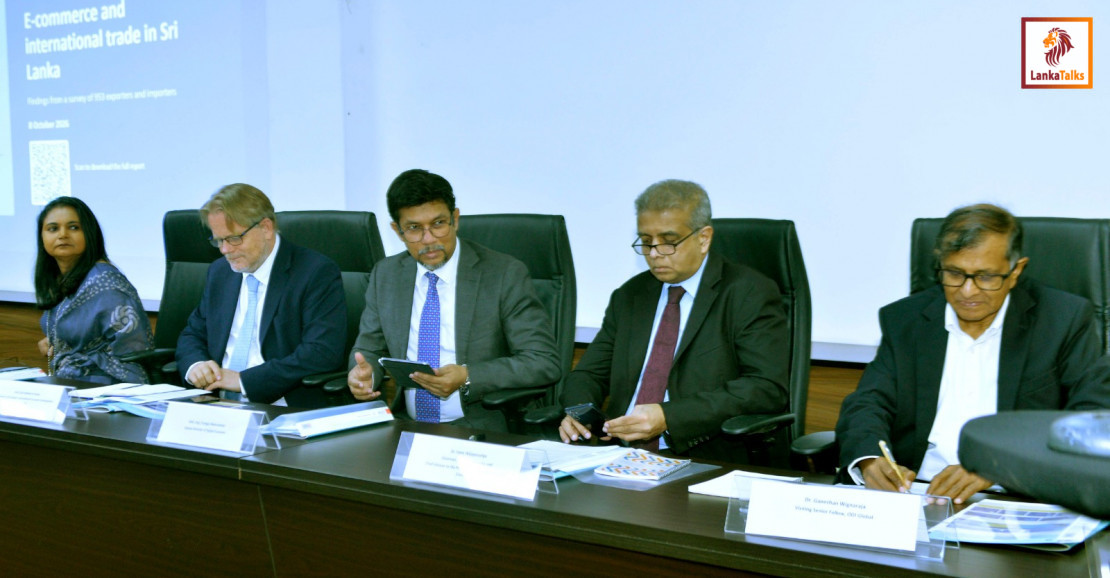
The report was launched at GovTech Sri Lanka in Colombo on 8 October 2026. Policymakers, industry leaders and researchers discussed how Sri Lanka can build a more competitive, connected and export-oriented digital trade ecosystem.
“E-commerce presents Sri Lankan businesses, particularly MSMEs, with a significant opportunity to reach global markets. Our priority must be to create an enabling environment by simplifying trade processes, strengthening digital infrastructure and logistics, and building the skills needed to compete globally. This report provides valuable evidence to help shape the reforms needed to advance Sri Lanka’s digital trade agenda.” – Eng. Eranga Weeraratne, Hon. Deputy Minister of Digital Economy.
The survey shows strong momentum. Seven in ten exporters already use e-commerce, including 72% of surveyed micro, small and medium-sized enterprise (MSME) exporters. It also offers new evidence on what these firms trade, where they sell and the obstacles limiting their growth.
E-commerce can widen Sri Lanka’s export base beyond established firms and traditional channels. Smaller businesses can test markets, sell directly to consumers and build international customer bases at lower cost. Exporters using e-commerce report broader access to markets in the Middle East, Europe and Asia. Direct-to-consumer trade is also growing in groceries, packaged foods, health and beauty products, and electronics.
“Building a globally competitive digital economy requires a clear understanding of where we stand and where we need to go. Rigorous, firm-level research such as this provides essential evidence for benchmarking our progress, understanding businesses’ firsthand experiences, and shaping the policies and interventions that will advance Sri Lanka’s competitiveness in digital trade” – Dr. Hans Wijayasuriya, Chief Advisor to the President of Sri Lanka on Digital Economy and Chairman of GovTech Sri Lanka.
However, getting businesses online is only part of the task. Sri Lankan e-commerce firms face high costs and delays in customs, documentation, logistics and payments, as well as gaps in cybersecurity and digital skills. Around 80% of surveyed e-commerce exporters reported difficulties with complex documentation. Delivery times are another concern: most business-to-consumer and business-to-business export shipments take more than two weeks to reach customers.
The report calls for coordinated reform across the digital trade ecosystem, rather than a narrow focus on encouraging firms to adopt e-commerce. Priorities include modernising trade infrastructure, simplifying customs and documentation, improving logistics and payment systems, strengthening cybersecurity, and expanding practical digital skills. Together, these measures could make cross-border transactions faster, simpler and more secure.
A survey of nearly 1,000 firms finds that e-commerce and small business are already important to Sri Lanka’s trade. Public policies to support small business in the digital economy and fix the cost base are critical for competitiveness’’ Dr. Ganeshan Wignaraja, Visiting Senior Fellow, ODI Global and co-author of the ODI report.
The findings are based on an island-wide survey of 953 exporters and importers conducted between October 2025 and February 2026, covering 9% of Sri Lanka’s trading firms. It is the country’s first firm-level study of the relationship between e-commerce and international trade and builds on earlier research into domestic e-commerce adoption.
The report moves the debate from whether Sri Lanka should embrace e-commerce to how the country can build the systems, capabilities and partnerships needed to compete. With the right enabling environment, digital trade can give Sri Lankan businesses—especially MSMEs—new routes to international customers, support innovation and contribute to a more diverse and resilient export economy.
Speakers at the launch included Eng. Eranga Weeraratne, Hon. Deputy Minister of Digital Economy; Dr. Hans Wijayasuriya, Chief Advisor to the President of Sri Lanka on Digital Economy and Chairman of GovTech Sri Lanka; and Prof. Dirk Willem te Velde, Director of ODI Global’s International Economic Development Group. Dr. Ganeshan Wignaraja, Senior Fellow at ODI Global, and Ms. Anishka De Zylva presented the findings, followed by a moderated discussion on the practical reforms needed to help Sri Lankan firms succeed online.
The event was jointly organised by ODI Global and SLASSCOM, bringing together public- and private-sector perspectives on the next steps for Sri Lanka’s digital trade agenda.