


 Breaking News
 Tracy
Tracy Tracy
Tracy Feb 13 2026
 1109
1109As renewable energy moves from rapid expansion to system-wide integration, the industry is confronting a new set of challenges—grid stability, cost efficiency, and intelligent coordination at scale. In response, Huawei Digital Power has introduced its Top 10 Trends of Smart PV & ESS 2026, outlining how solar, wind, and energy storage can evolve into dependable, primary energy sources.
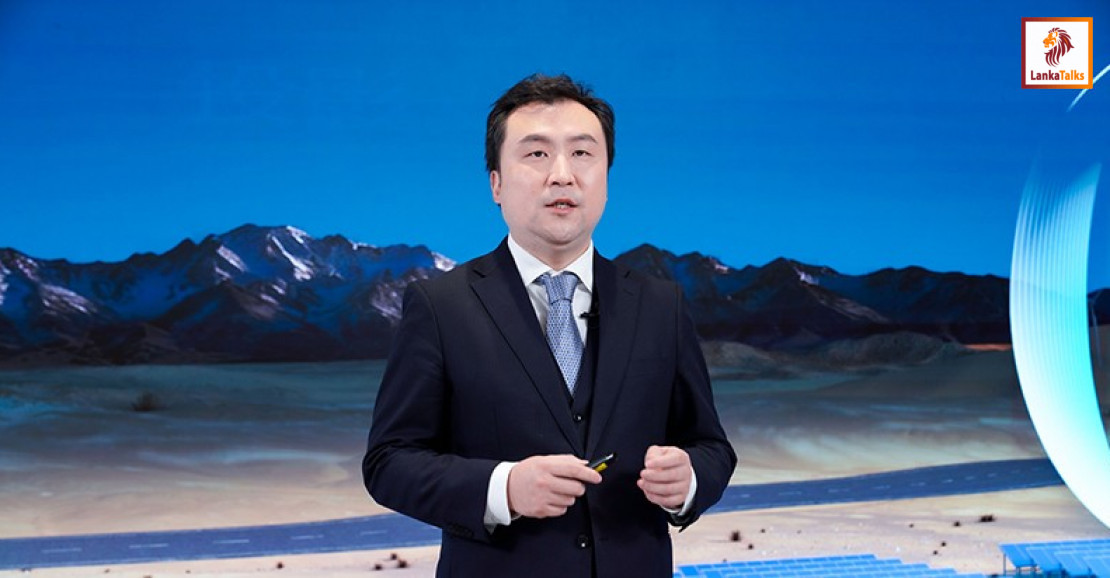
Released at Huawei’s Smart PV & ESS launch event, the trends were unveiled by Eric Zhong, Vice President and Chief Marketing Officer of Huawei’s Smart PV & ESS product line, alongside a white paper mapping practical pathways for the next phase of renewable power development.
The 10 trends are, PV, wind, and ESS synergy enabling renewables to become predictable, controllable, and stable power sources, Grid-forming energy storage systems emerging as a foundation for power grid stability and balance, Generation–grid–load–storage coordination driven by AI to support regional autonomy and global power optimization, Residential PV and ESS shifting from AI-enabled to AI-native, delivering a fully optimized energy experience, Higher frequency and power density significantly increasing the efficiency of PV and ESS devices, High-voltage, high-reliability architectures accelerating reductions in the levelized cost of electricity, System-level battery management, recognizing that batteries alone are not equivalent to safe and stable ESS, Mature grid-forming technology systems evolving from passive support to active grid architecture, AI agents enabling power plant automation through cloud-edge-device collaboration and Quantified safety standards driving measurable improvements across the energy storage lifecycle.
ESS safety is shifting from sample-based checks to comprehensive, system-level assessments across the entire lifecycle. By defining measurable safety indicators and continuously enhancing capabilities to meet rated requirements, the industry can finally resolve long-standing issues such as unclear safety boundaries and insufficient prevention and control. This establishes a solid foundation for the sustainable growth of the energy storage sector.
All-scenario grid-forming, unleashing AI, and forging excellence are not only guiding principles for technological progress, but also for sustainable development. Huawei Digital Power hopes to work with industry partners and practitioners from all walks of life to jointly explore the future of the PV+ESS industry. Together, we will drive industry progress through insight and innovation, accelerate the adoption of PV+wind+ESS as main energy sources, make green electricity available to every home and business, and build a better, greener future.