


 Breaking News
 LankaTalks
 LankaTalks
 Mar 06 2026
 690
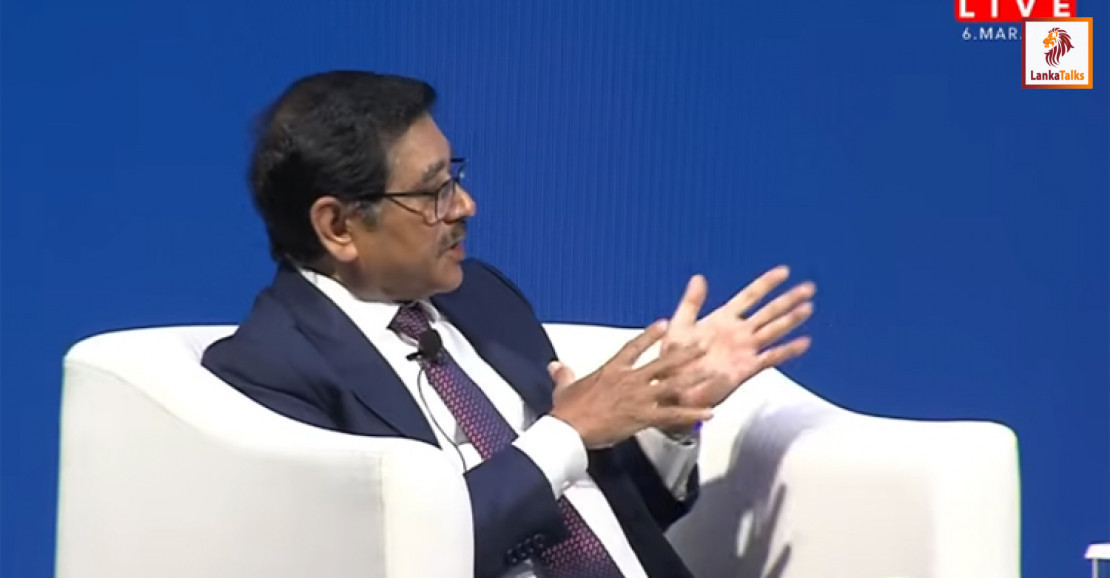
690Sri Lanka's Central Bank Governor, Dr. P. Nandalal Weerasinghe, emphasized the need for targeted regional integration in South Asia, highlighting opportunities in energy security and digitalization as "low-hanging fruits" that could deliver immediate benefits. Speaking at a high-level roundtable in Bangkok, he drew comparisons with ASEAN's progress while pointing out barriers in South Asia's protected economies.
During the discussion on regional integration, Dr. Weerasinghe noted ASEAN's ongoing efforts, stating that intra-regional trade currently stands at 22%, with projections to reach 50% by 2050. "We talk about, even ASEAN talk about this regional integration for a long time and it's happening actually," he said. However, he advocated for a pragmatic approach over broad initiatives: "Rather than having the much broad integration, integration in areas where that gives you immediate benefits, for example, like discussion was that payment and settlement connections and data sharing, all these easier low hanging fruits will be much more effective in the short term while moving towards integration."
Turning to South Asia, Dr. Weerasinghe described it as "even much less integrated," with intra-regional trade less than half that of ASEAN. He attributed this to "very close protected economies" within the bloc, despite India's robust growth of 5-7% annually. "What is the reason for that? Basically, we all, within this, within the block, this South Asian block, is very close protected economies," he explained.
A key focus was energy security, where Dr. Weerasinghe highlighted untapped renewable potential in the region. He pointed to Nepal and Bhutan's capacities, which have remained underutilized for decades due to "internal regulations, restrictions, and fear of open up for this, for investment abroad coming into these areas." In Sri Lanka, he added, "we have a huge wind power, solar power potential. Why can't we have this investment open up and then have a good connectivity to India, to the region? So these are the regional integration, easily beneficial, and that can lift the region up."
Dr. Weerasinghe also praised India's advancements in digitalization as a model for integration. "India has done a great strides in recent past, and why can't, and this is other easy area that we can have more integration in terms of digital connectivity, permanent settlement with India, with advanced technologies in terms of digitalization," he said. He suggested extending connections to Singapore and Malaysia, arguing that such targeted efforts avoid the complexities of broader political economy issues. "These are the areas people will have immediate benefits, and there will be support from the people, and it is easier to implement in these areas," he concluded.
The remarks were made at the roundtable titled “Bringing Everything Together - Policy Challenges for Asia Going Forward,” held as part of the Asia in 2050 conference in Bangkok from March 4-6, 2026. The event, organized ahead of the 2026 Annual Meetings of the International Monetary Fund (IMF) and the World Bank Group, brought together key figures including IMF Managing Director Kristalina Georgieva, Malaysia's Finance Minister Amir Hamzah Azizan, and Thailand's Deputy Prime Minister and Finance Minister Ekniti Nitithanprapas. Moderated by Bloomberg's Haslinda Amin, the discussion aimed to explore Asia’s long-term growth prospects and policy challenges, fostering collaboration among policymakers and experts.
Source: Adaderana